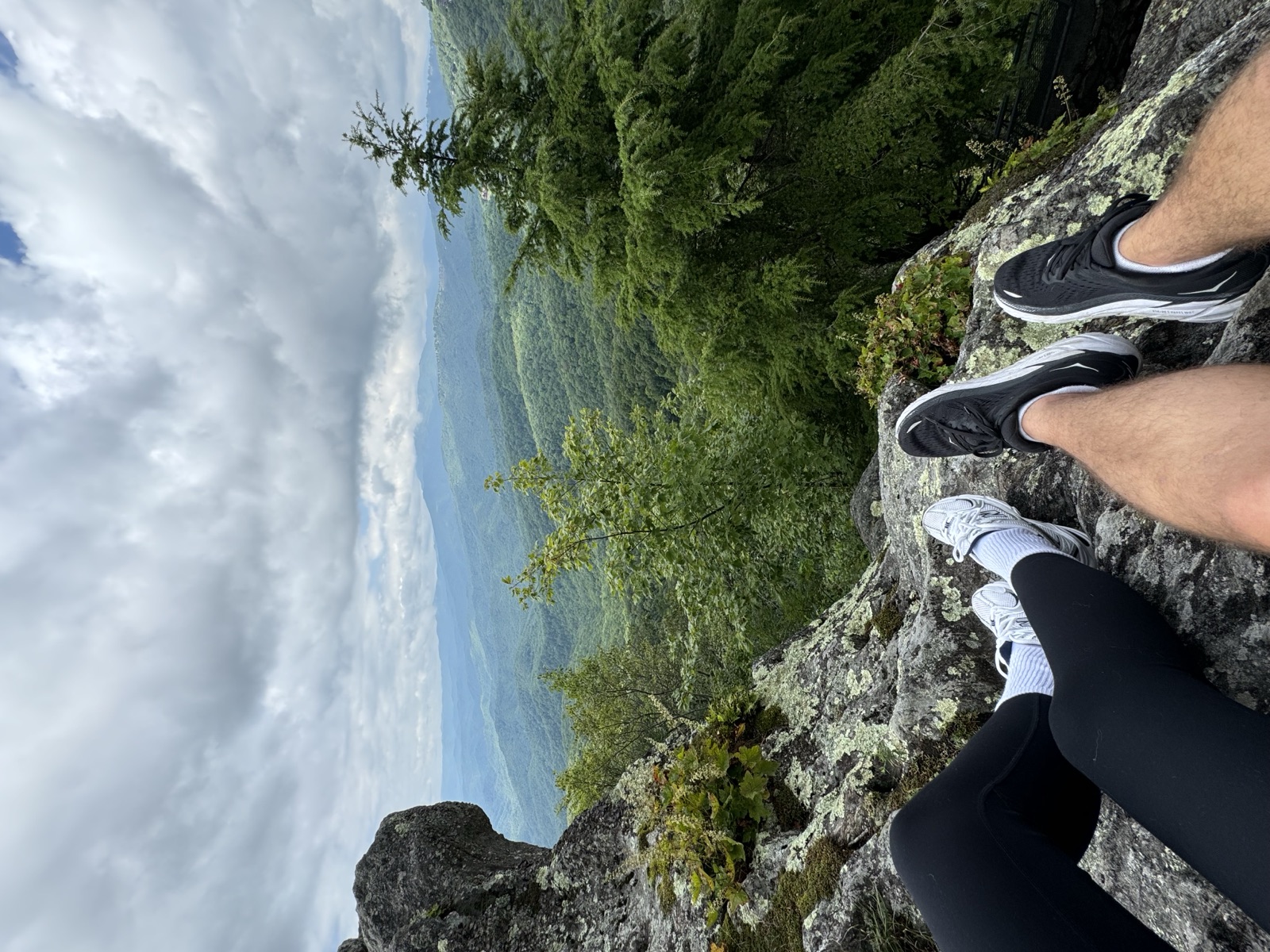
Great Smoky Mountains National Park is the most visited national park in the United States, pulling in over 12 million visitors a year. That number matters because it shapes how you plan your trip, the wrong weekend in October and you are sitting in a parking lot for two hours instead of hiking. The good news is the park is huge, the trails are excellent, and most of the crowd problems are concentrated in a handful of spots. Go early, go midweek, go in April or November, and you will have one of the best outdoor experiences in the Southeast.
From the North Carolina side, the main gateway is Cherokee, NC on US 441. Bryson City and the Deep Creek area are the quieter NC entrances. The Tennessee side through Gatlinburg is more famous but also far more congested. If you are coming from Asheville or Charlotte, the NC approach is the right call.
Plan Your Visit
Fees and Parking
Great Smoky Mountains is one of the only major national parks with no vehicle entrance fee. This is due to a historic deed restriction tied to the donation of land along Newfound Gap Road when the park was established. That will not change.
There is, however, a parking fee that started in 2023 and is still in effect. You need a parking tag to park at most trailheads and developed areas in the park.
- Daily parking tag: $5
- 7 day parking tag: $15
- Annual parking tag: $40
- Stays under 15 minutes: free
Important: The America the Beautiful interagency pass does NOT cover the parking tag fee at Great Smoky Mountains. This is a common point of confusion. You still pay the full parking rate regardless of your pass status.
When To Go
April through early May is one of the best windows, wildflowers are blooming, crowds are moderate compared to summer, and the park is fully open. November is equally good for crowd management and often has beautiful late season color at lower elevations. Summer is very busy but manageable if you arrive at trailheads by 8 AM. Peak fall color (October 15–25 at mid elevations) is stunning and brings the park's biggest crowds, expect full parking lots by 9 AM on weekends and gridlock on Newfound Gap Road. Midweek visits in any season cut wait times dramatically.
Top Trails and Attractions
Kuwohi (Formerly Clingmans Dome)
The highest point in the park at 6,643 feet and the highest point on the entire Appalachian Trail. You may still see it listed as Clingmans Dome on older maps, but the name was officially changed to Kuwohi in 2024 at the request of the Eastern Band of Cherokee Indians, restoring the original Cherokee name. The summit road opened for the 2026 season on April 1. Getting there requires a 1 mile round trip paved trail from the parking lot to the observation tower. The hike is short but steep. On a clear day, the views stretch for 100 miles.
Location: Kuwohi Road off Newfound Gap Road (US 441). Road open April 1 through late November, weather permitting. Free to access; standard parking fee applies. Expect limited parking and significant crowds during spring and fall.
Cades Cove
An 11 mile one way loop road through an open valley with historic homesteads, old growth forest edges, and some of the best wildlife watching in the park. White tailed deer are almost guaranteed. Black bears, coyotes, and wild turkeys show up regularly in early morning and evening. The historic buildings, mills, churches, log cabins, are well preserved and free to explore. Plan two to three hours minimum. Get there early; the loop can crawl on busy weekend afternoons.
Location: Lamar Alexander Pkwy / Cades Cove Loop Road, Tennessee side. Open daily 8 AM to sunset. Vehicle free Wednesdays May 6 through September 30, pedestrians and cyclists only on those days. Parking fee applies.
Alum Cave Trail
One of the most dramatic day hikes in the Smokies. The trail follows a creek through old growth hemlock to Arch Rock, then climbs to the Alum Cave Bluffs, a massive overhanging cliff with views down the valley. The full trail continues up to the Mt. LeConte summit (5.5 miles one way) but the out and back to Alum Cave Bluffs at 2.3 miles is satisfying enough for most visitors. The upper section uses cable handholds, not technical but adds some adventure. One of the more popular trails in the park, so arrive early.
Location: Alum Cave Trailhead on Newfound Gap Road (US 441), about 8.5 miles from Sugarlands Visitor Center. Parking fee applies. Trailhead lot fills by 9 AM on weekends.
Roaring Fork Motor Nature Trail
A 5.5 mile one way loop through old growth forest past streams, cascades, and historic homesteads. This is the quieter, more intimate alternative to Cades Cove. The road is narrow, paved, and beautiful. Several short trails branch off it, Place of a Thousand Drips and Rainbow Falls are both accessible from the road. No buses, motorhomes, or vehicles over 25 feet allowed.
Location: Off Historic Nature Trail Road in Gatlinburg, TN. Opens May 1, 2026 (delayed slightly for winter repairs). Closed in winter. Parking fee applies.
Chimney Tops Trail
A challenging, rewarding trail to one of the most distinctive viewpoints in the park. The Chimney Tops are two rock pinnacles visible from Newfound Gap Road, the hike up is steep and the payoff is enormous. Note that the actual summit pinnacles have been permanently closed since the 2016 wildfire due to safety concerns. The trail leads to an observation deck about 0.25 miles below the top, which still delivers excellent views of Mt. LeConte and the surrounding ridgelines. Worth doing with the full understanding of what is and is not accessible.
Location: Chimney Tops Trailhead on Newfound Gap Road, about 7 miles from Sugarlands Visitor Center. 4 miles round trip. Steep. Parking fee applies.
Abrams Falls
A 20 foot waterfall in a remote feeling setting deep in the Cades Cove area. The trail is 5 miles round trip with some elevation but nothing extreme. The pool at the base is beautiful and often less crowded than the big name Smokies attractions. Start from the Abrams Falls Trailhead between mileposts 10 and 11 on the Cades Cove Loop Road.
Location: Abrams Falls Trailhead, Cades Cove Loop Road (TN side). Note: Several nearby Abrams Creek area trails are currently closed due to a recent wildfire, the main Abrams Falls Trail appears unaffected but verify current conditions at the Cades Cove Visitor Center on arrival.
Cherokee, NC: The Eastern Gateway
Cherokee is the main North Carolina entrance to the park and the home of the Eastern Band of Cherokee Indians. Beyond its role as a gateway, it has several attractions worth spending a half day on before or after your park time.
Museum of the Cherokee People
One of the best indigenous cultural museums in the Southeast and frequently underrated. The museum covers 12,000 years of Cherokee history through artifacts, oral histories, and interactive exhibits. It reopened several years ago following major renovations and is now significantly better than the older version many visitors remember. Plan 90 minutes minimum. Located right in downtown Cherokee.
Address: 589 Tsali Blvd, Cherokee, NC. Open daily 9 AM to 5 PM (ticket sales close at 4 PM). Closed Thanksgiving, Christmas, New Year's Day and a handful of other holidays. Admission charged.
Oconaluftee Indian Village
A living history village where Eastern Band Cherokee demonstrate traditional crafts, music, cooking, and daily life from the 18th century. The guided experience is thorough and genuinely educational. Cultural demonstrations include Cherokee dancing, traditional weapon making, and basket weaving. Open for the 2026 season.
Address: 218 Drama Rd, Cherokee, NC. Open Tuesday through Saturday, 9:30 AM to 4:30 PM. Closed Sundays and Mondays.
Qualla Arts and Crafts Mutual
A cooperative gallery selling work made exclusively by Eastern Band Cherokee artists, baskets, pottery, wood carvings, beadwork, and more. This is the most direct way to purchase authentic Cherokee art and support the artists directly. The showroom is free to browse and is worth a stop even if you are not planning to buy.
Address: 645 Tsali Blvd, Cherokee, NC (adjacent to the Museum of the Cherokee People). Open daily 8 AM to 4:30 PM, April through December. Free to enter.
Mingo Falls
A stunning 120 foot waterfall on the Mingo Creek, just outside Cherokee on the Eastern Band reservation. The hike is very short, about a third of a mile, but involves 160 steep stairs. No admission fee. The falls are dramatic year round and spectacular after heavy rain. One of the best quick stops near Cherokee.
Location: Big Cove Rd, Cherokee, NC. Open year round during daylight hours. No fee. Parking fills during peak season, arrive early.
Harrah's Cherokee Casino Resort
A full scale casino resort operated by the Eastern Band on tribal land. If you are looking for dinner, a show, or a place to stay in Cherokee, this is the main option. The resort has multiple restaurants, a spa, and regular entertainment programming. Not everyone's scene but worth knowing about as an option for lodging near the park.
Bryson City and Deep Creek
Bryson City is the quieter NC gateway town, about 20 minutes west of Cherokee on US 74. The Deep Creek area of the park is accessed from here and offers tubing, waterfall hiking (Tom Branch Falls, Indian Creek Falls), and excellent trout fishing. The Nantahala Outdoor Center is also nearby for white water rafting. The town itself has a great food and craft beer scene that earns its own page.
Read the full Bryson City guide for the complete breakdown of what to do, where to eat, and how to access the Deep Creek side of the park.
Deep Creek 2026 season: April 2 through November 1. Tubing, trails, and fishing all available. Caldwell Fork Trail and Gunter Fork Trail are currently closed due to Hurricane Helene trail damage, the main Deep Creek Loop and popular day use trails are unaffected.
Getting to Great Smoky Mountains
From Asheville, the Cherokee entrance is about 1 hour 15 minutes west on US 74 West. From Charlotte, it is about 3 hours. The drive on US 74 through the Nantahala Gorge is a great warm up, one of the most scenic roads in western NC. Once inside the park, Newfound Gap Road (US 441) is the main artery running 30 miles north south through the park from Cherokee to Gatlinburg, Tennessee.
The park has no public transportation beyond the occasional shuttle. A car is required for all major attractions. Overnight parking for backpacking requires a permit; day hiking does not.
Frequently Asked Questions
Is there an entrance fee for Great Smoky Mountains National Park?
No. Great Smoky Mountains is one of the only major national parks with no vehicle entrance fee, due to a historic deed restriction tied to the donation of land along Newfound Gap Road. There is, however, a parking fee: $5 per day, $15 for a 7 day pass, or $40 annually. The America the Beautiful interagency pass does not cover the parking fee here.
What is Kuwohi in the Smoky Mountains?
Kuwohi is the new official name for what was previously called Clingmans Dome. The name was formally changed in 2024 at the request of the Eastern Band of Cherokee Indians, restoring the Cherokee name for the mountain. At 6,643 feet, it is the highest point in the park and the highest point on the entire Appalachian Trail. The road to the summit opens each year around April 1 and closes in late November.
What is the best time to visit Great Smoky Mountains National Park?
April through early May and November are the best times for avoiding major crowds while still having good conditions. Fall foliage peaks around October 15 25 at mid elevations and draws enormous crowds, expect parking gridlock on weekends. Summer is very busy. Midweek visits cut wait times significantly in any season.
Where is the North Carolina entrance to Great Smoky Mountains?
The main NC entrance is through Cherokee, NC on US 441, which becomes Newfound Gap Road through the park. Bryson City provides access to the Deep Creek area on the NC side. From Asheville, the Cherokee entrance is about 1 hour 15 minutes west on US 74.
The Smokies reward the people who plan around the crowds. Get there before 9 AM, pick trails that are not on every top ten list, and spend a few hours in Cherokee before or after the park. Do that and you will understand why 12 million people a year keep coming back.