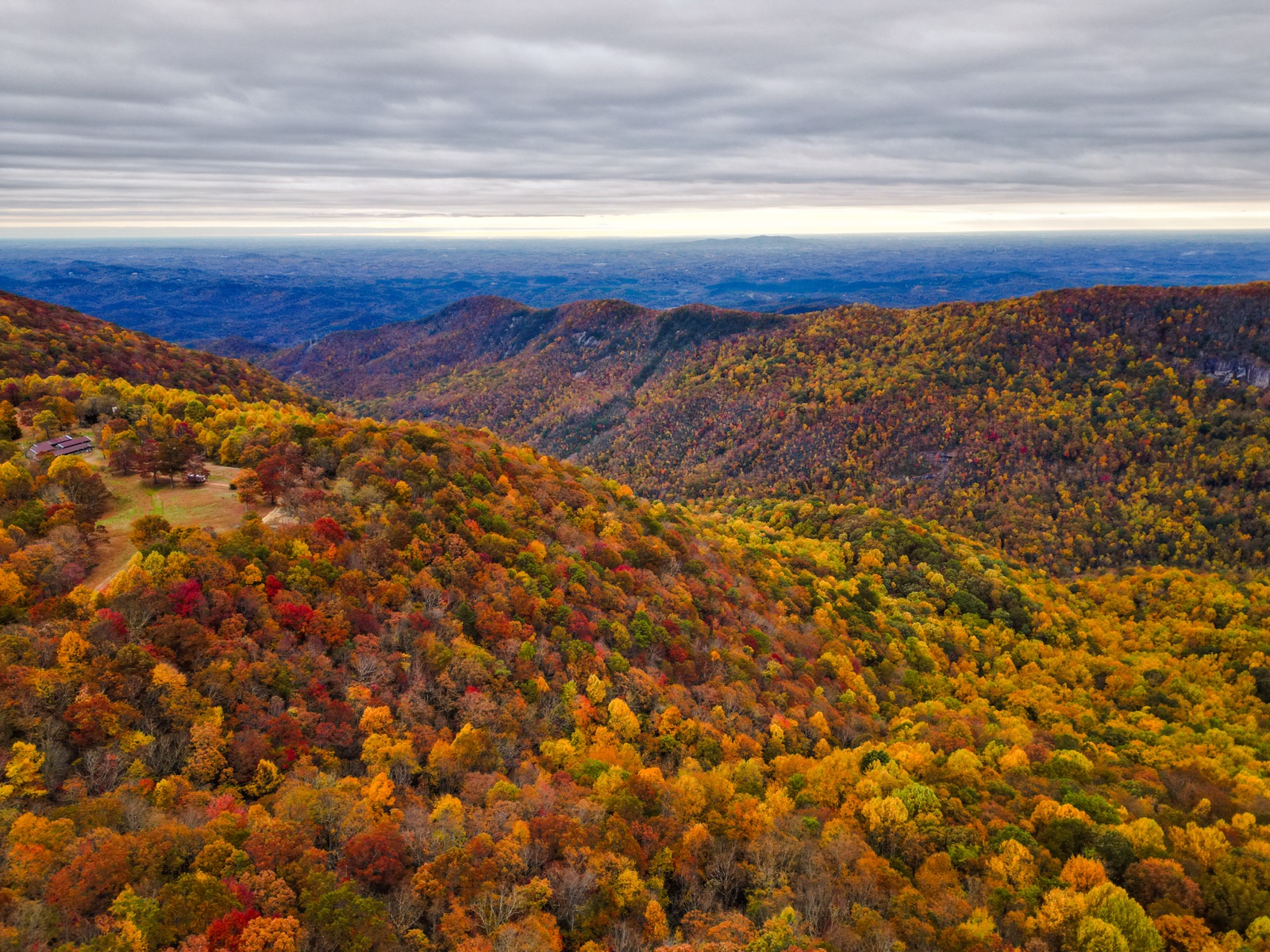
The Blue Ridge Parkway fall drive in NC is one of the most beautiful road trips in the country. This road runs for 469 miles along the top of the Appalachian Mountains. The NC section alone is 252 miles and passes through some of the most stunning scenery in the East. In October the whole ridge turns gold, orange, and red.
What Is the Blue Ridge Parkway?
No traffic lights. No commercial trucks. No billboards. Just mountain views around every curve. The parkway connects Shenandoah National Park in Virginia to Great Smoky Mountains National Park in North Carolina. It was built during the Great Depression and completed in 1987. The speed limit is 45 mph but you will want to go much slower.
The road is managed by the National Park Service and is free to drive. It is one of the most visited units in the entire national park system. More people drive this road every year than visit Yellowstone.
When To Drive the Blue Ridge Parkway in NC
Peak fall color on the NC section typically runs mid October through early November. Higher elevations above 5,000 feet peak first, around October 10 to 20. Lower sections peak later in October. Spring from late April through May is also stunning with wildflowers and waterfalls running full. Summer is green and cool. Winter brings snow and ice and some closures, but the views of bare ridges can be dramatic.
Best Stops on the NC Section
Waterrock Knob (Milepost 451.2)
One of the best sunset spots on the entire parkway. At 6,292 feet, this is one of the highest accessible points on the NC section. There is a short trail to the summit with wide views in every direction. Go at golden hour and you will not regret it.
Black Balsam Knob (near Milepost 420)
Park at the Art Loeb Trailhead and hike up to the bald summit. Wide open views of the surrounding ridges with no trees to block the sky. This is one of the best short hikes off the parkway and most people drive right past it.
Graveyard Fields (Milepost 418.8)
One of the most popular stops on the whole parkway. A short trail leads to two waterfalls through a high elevation meadow. Beautiful any time of year. Read our full Graveyard Fields guide for details and directions.
Linn Cove Viaduct (Milepost 304.4)
One of the most famous sections of the road. The viaduct curves around the base of Grandfather Mountain and was one of the last pieces of the parkway to be built. Stop at the visitor center below and walk under the viaduct for a great photo.
Craggy Gardens (Milepost 364.4)
In June this area explodes with purple rhododendrons. The short hike to the summit gives you views in all directions. Even outside of bloom season the rocky summit and open sky make it worth the stop.
Max Patch (near Milepost 435)
Not directly on the parkway but only a few miles off it. A bald summit with 360 degree views. One of the best hikes in all of western NC. Read the full Max Patch guide for directions and what to expect.
Practical Tips For Driving the Parkway
- Fill up your gas tank before you get on. There are very few gas stations on the road.
- The road closes in sections during ice and heavy snow. Check the NPS website before you go in winter.
- Cell service is spotty. Download an offline map before you leave.
- There are no entrance fees. The parkway is free.
- Sunrise and sunset are the best times to drive. The light is incredible and most overlooks are less crowded.
Where To Enter the NC Section
The southern end starts at the Oconaluftee Visitor Center at Great Smoky Mountains National Park near Cherokee NC. The northern end connects to Virginia near the NC state line. You can jump on and off at many points along the way. Most visitors from Asheville enter near milepost 382 at the US 25 junction.
Frequently Asked Questions
When is the best time to drive the Blue Ridge Parkway in NC?
October is peak fall foliage. Mid October is ideal for the higher elevations. Late October works well for the lower sections.
Is the Blue Ridge Parkway free?
Yes, there is no entrance fee to drive the parkway.
How long does it take to drive the whole NC section?
The 252 mile NC section takes about 5 to 6 hours straight through. With stops at overlooks and trailheads, plan a full day or a multi day road trip.
The Blue Ridge Parkway is not something you rush. Slow down, pull over at every overlook, and take it all in.