NC State University sits on the western edge of downtown Raleigh, and it has been shaping the city since 1887. It is not just a big public university. It is the institution that pulled Raleigh from a slow tobacco and government town into one of the fastest growing tech and life sciences hubs in the country. If you want to understand why Raleigh looks and feels the way it does today, you start with NC State.
Founded as a Land Grant School
NC State was established in 1887 as the North Carolina College of Agriculture and Mechanic Arts, built on the promise of the federal Morrill Act. The idea was practical: give North Carolina a university that trained engineers, scientists, and farmers, not just lawyers and ministers. From the beginning, NC State's purpose was applied knowledge. Build things. Grow things. Solve problems that matter to real people.
That mission never went away. It is baked into the school's culture in a way that you can still feel today. NC State graduates tend to want to make things. The university's engineering, agriculture, and textile programs grew with the state's industries through the early 20th century, producing the workforce that ran North Carolina's mills, farms, and factories. And when those industries started to decline, NC State pivoted with them.
Year NC State was founded as a land grant university
Students enrolled, one of the largest universities in NC
Annual economic impact on North Carolina
The Research Triangle Park Connection
In the late 1950s, North Carolina had a problem. Its best and brightest kept leaving. The state's economy was built on tobacco, textiles, and furniture, industries that were starting to stagnate. Young engineers and scientists graduating from NC State, UNC, and Duke had no reason to stay. There were no employers worthy of their training. So they went to New York, Boston, and California.
A group of business and civic leaders had an idea. What if you built a research park in the middle of the triangle formed by those three universities? What if you pitched the cluster of talent, the climate, and the cost of living to major corporations looking for somewhere to put their research and development operations? It was a bold pitch for 1959. It worked.
Research Triangle Park opened that year. IBM was one of the first tenants. Burroughs Wellcome followed. The EPA came. GlaxoSmithKline, now one of the park's largest employers, built its North American headquarters there. Today RTP is one of the largest research parks in the world, covering more than 7,000 acres between Raleigh and Durham, hosting hundreds of companies and tens of thousands of jobs. NC State's engineering and computer science programs are directly responsible for a significant share of the talent that fills those buildings every day.
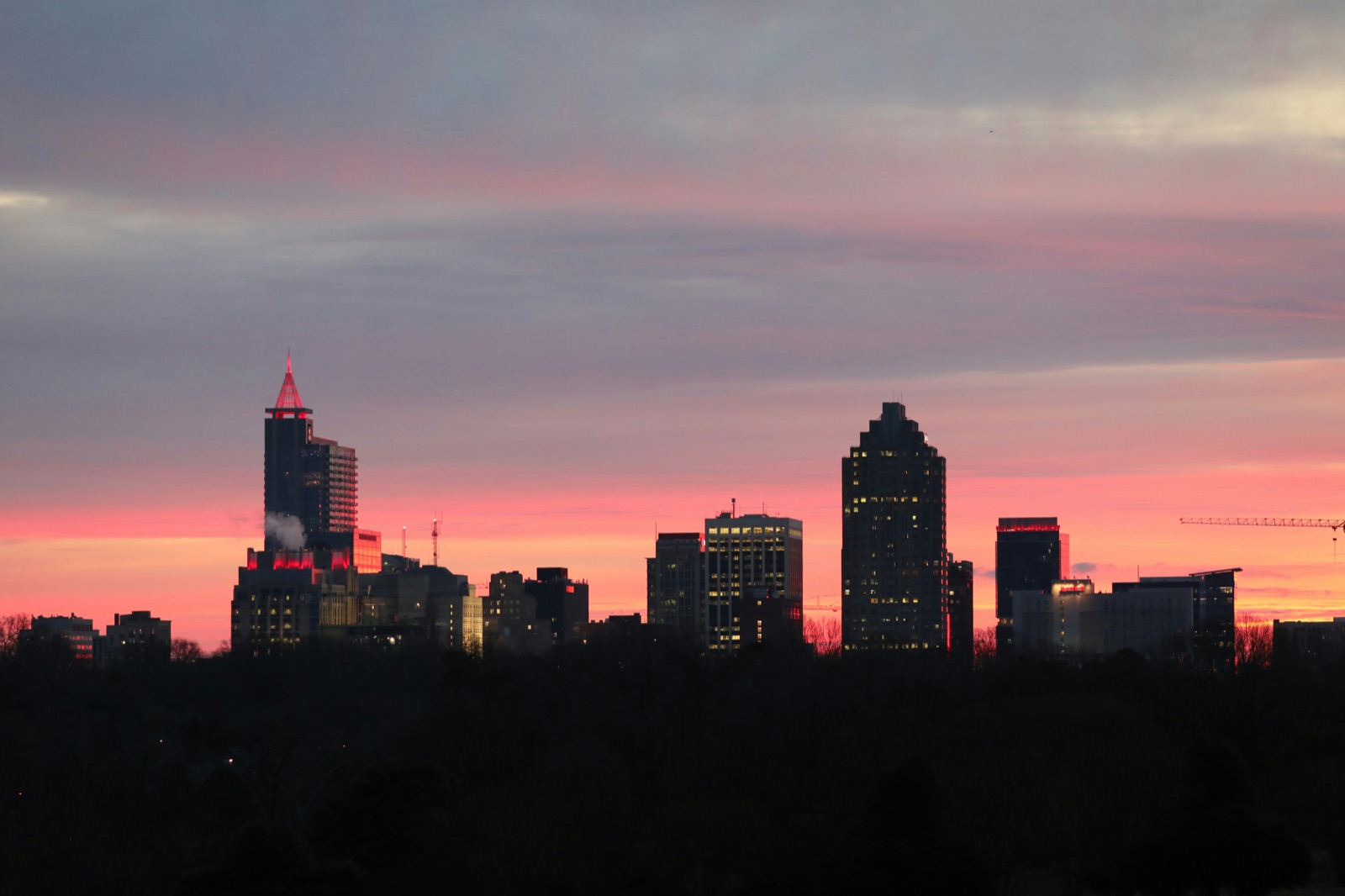
RALEIGH NC, ONE OF THE FASTEST GROWING CITIES IN THE SOUTH
Centennial Campus: A Tech Park Built Into the University
Most universities and industry operate at arm's length. NC State did something unusual: it built its own tech park directly attached to campus. Centennial Campus, which opened in the 1980s on land the university acquired adjacent to main campus, is a 1,334 acre mixed use research hub where companies work alongside university researchers in the same buildings.
That is not a metaphor. A company like SAS Institute, Red Hat, or a biotech startup can literally have its offices in the same building as NC State faculty working on related problems. The idea was intentional: blur the line between university research and commercial application. It has been one of the most successful models of its kind in the country. More than 300 companies, government agencies, and nonprofits operate on Centennial Campus today.
The Hunt Library, which opened on Centennial Campus in 2013, is worth visiting just to see what a 21st century university library looks like. It is a striking building with a robotic book retrieval system, a gaming lab, a massive digital display wall, and some of the best study and collaboration spaces in the region. It is open to the public during regular hours.
What NC State Does for Raleigh Today
The university's influence on the city is not abstract. It shows up in specific ways that anyone spending time in Raleigh will notice.
- The startup ecosystem. NC State's entrepreneurship programs and the Wolfpack Investor Network have seeded dozens of Raleigh area startups. The university's technology commercialization office consistently ranks among the most active in the country for spinning out new companies.
- The workforce pipeline. NC State's engineering, computer science, biotech, and agricultural science programs produce graduates that local and regional employers recruit heavily. The universities to RTP talent pipeline is one of the most reliable in American tech.
- The food and restaurant scene. The Hillsborough Street corridor directly adjacent to campus has become one of Raleigh's more interesting neighborhoods for bars, coffee shops, and restaurants, driven in part by the student and faculty population. The energy that a 36,000 student campus brings to a city is real and tangible.
- Game days. NC State athletics, especially football and basketball, are a significant part of Raleigh's cultural identity. Carter Finley Stadium holds 57,000 people. PNC Arena, which the Wolfpack shares with the Carolina Hurricanes, is one of the best mid sized arenas in the country.
- Agriculture and food systems. NC State's College of Agriculture and Life Sciences remains one of the best in the country and drives research that affects farming across the state. Its work on sweet potato varieties, hog waste management, and sustainable forestry has real consequences for rural North Carolina.
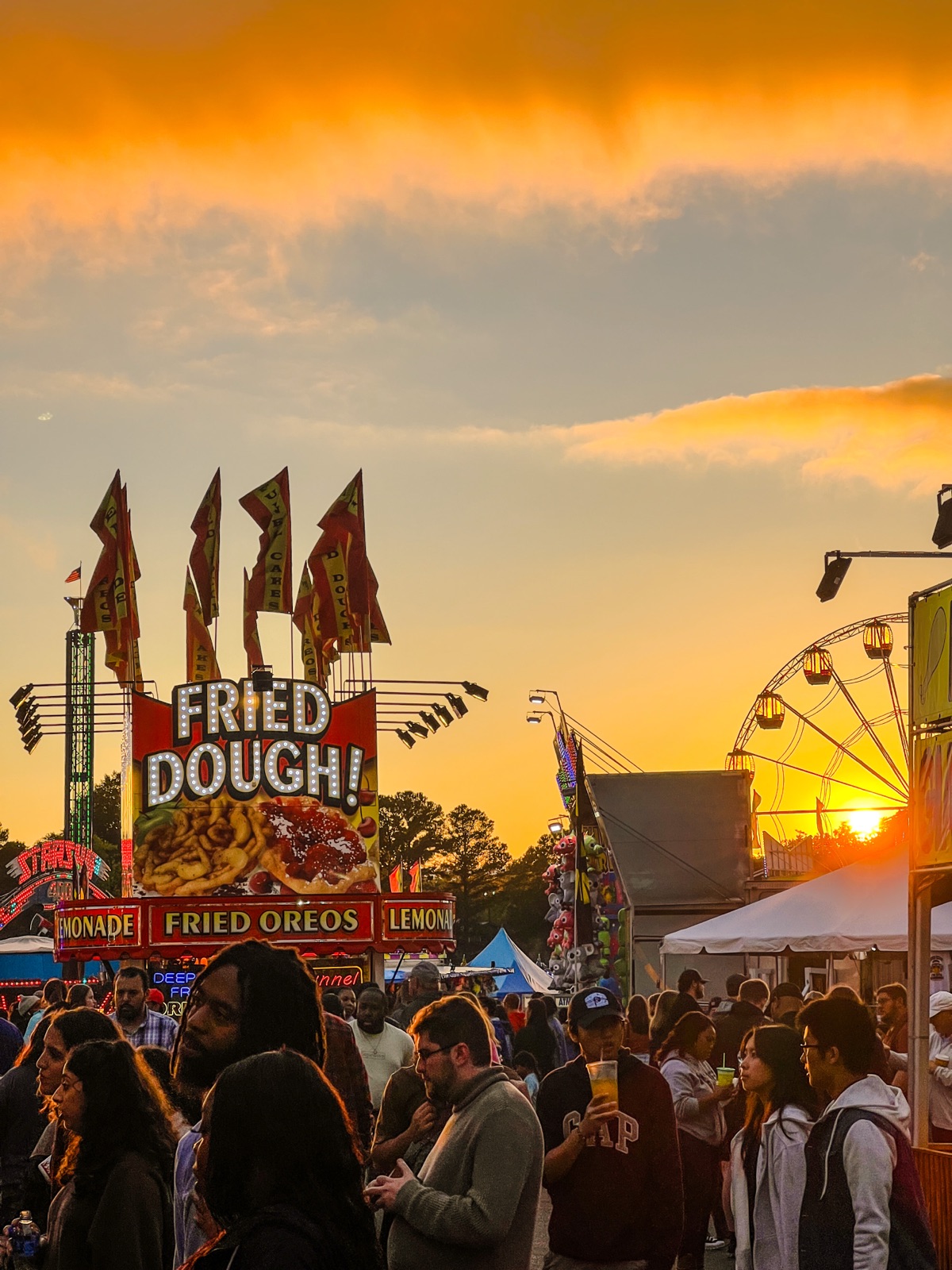
RALEIGH NC, NC STATE BRINGS TENS OF THOUSANDS OF PEOPLE INTO THE CITY
What to See on Campus
The NC State campus is open to the public and worth a few hours of exploration, especially if you are visiting Raleigh for the first time.
- The Memorial Belltower. The most recognizable landmark on campus, a 115 foot tower built in 1949 to honor NC State alumni who died in World War II. It sits at the western entrance to the Brickyard, the brick paved central gathering space at the heart of campus.
- The Brickyard. The open plaza at the center of the academic core. On a nice day it is full of students, events, and the hum of a large university at work. Good place to orient yourself before exploring.
- The Free Expression Tunnel. A pedestrian tunnel under the railroad tracks that bisects campus, painted and repainted constantly by students with murals, political messages, and artwork. It is one of the most interesting and authentic student culture artifacts on any campus in the South.
- Hunt Library (Centennial Campus). Take the walk or the bus shuttle to Centennial Campus to see Hunt Library. Even if you are not a student, the building itself is worth the trip. The robot retrieves books from a climate controlled storage system. The views from the upper floors are excellent.
- JC Raulston Arboretum. A world class horticultural garden on the edge of campus, free to the public. One of the best collections of plants adapted to the Southeast climate in the country. Good any season, excellent in spring.
- Lake Raleigh. A small lake on the south end of Centennial Campus with walking trails. Easy to combine with a Hunt Library visit. Good for a quiet 30 minute walk.
The Wolfpack and Game Day in Raleigh
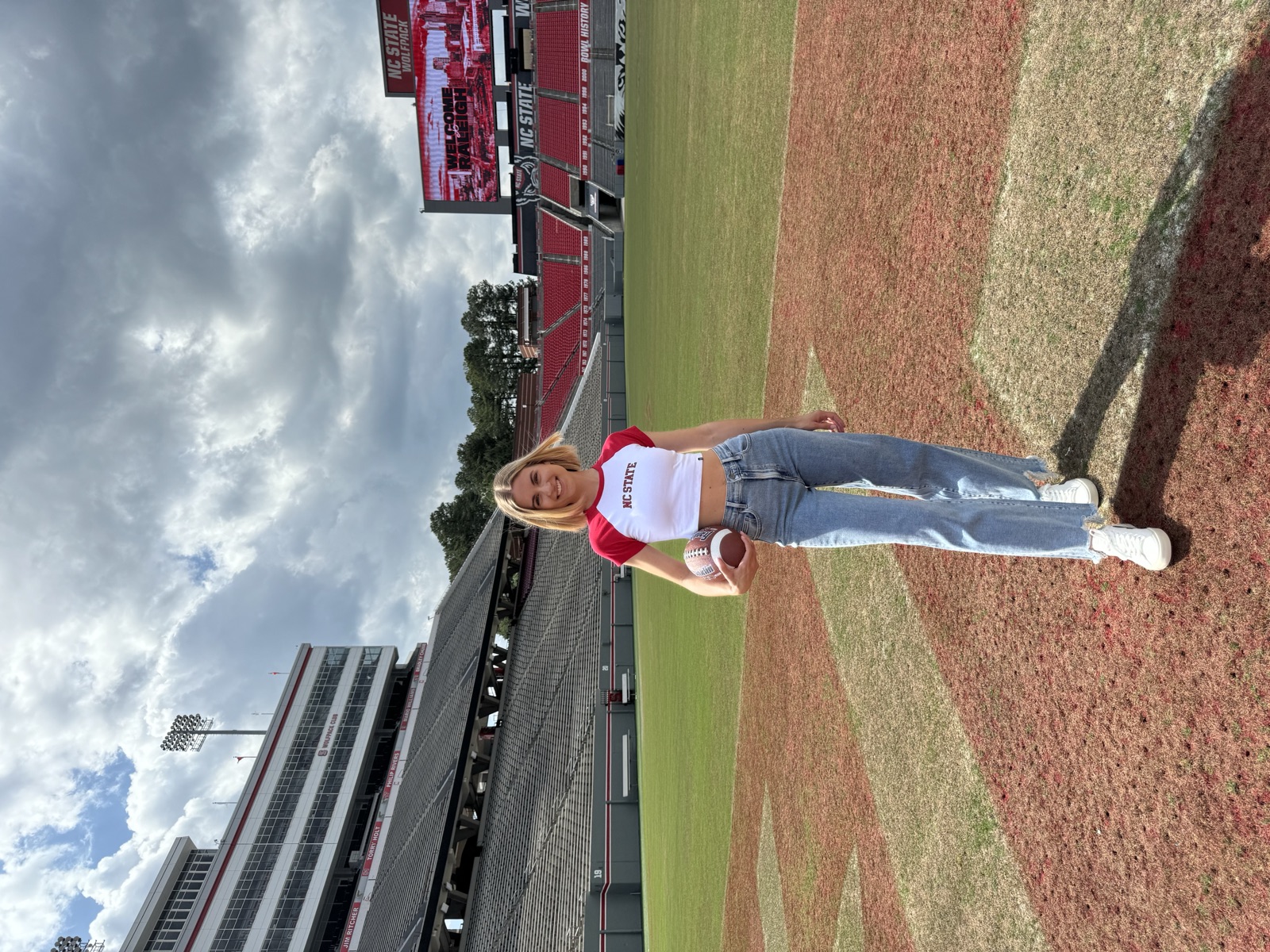
If you are visiting Raleigh on a football Saturday in the fall, you will feel NC State's presence immediately. Carter Finley Stadium is off Trinity Road near the State Fairgrounds, and on game days the surrounding neighborhoods fill up hours before kickoff. The tailgate culture here is genuine, this is a state school with a deep regional following, not an imported college football experience.
Basketball at PNC Arena is worth experiencing for the atmosphere alone. The Wolfpack basketball program has some of the most passionate fans in the ACC, and the arena is loud in a way that smaller venues can't replicate. Check the schedule if you are visiting between November and March.
Hillsborough Street, which runs along the north edge of campus, is the best place to eat and drink before or after a game. Goodberry's Creamery is an NC State institution. Players Retreat, known to everyone as PR's, has been a campus bar for decades. The stretch between campus and downtown has enough food and drink options to fill an entire evening.
Hillsborough Street: Where Campus Meets the City
Hillsborough Street is the main artery connecting NC State to downtown Raleigh. It has gone through cycles of decline and revival and is currently in one of its better periods. The neighborhood has independent coffee shops, pizza by the slice, Thai food, bars with good tap lists, and a general energy that comes from being adjacent to a large university.
It is not a fancy neighborhood. That is the point. Hillsborough Street is unpretentious in a way that the shinier parts of downtown Raleigh have lost. The prices are reasonable, the crowds skew young, and things stay open late. If you want to see what Raleigh feels like at the ground level rather than in its polished food hall version, Hillsborough Street gives you that.
NC State's campus is most alive during the academic year (August through May). Summers are quieter. If you want to experience the full energy, students, events, open libraries, active Centennial Campus, visit during fall or spring semester. Check nc.edu for the academic calendar and game schedules before you go.
Frequently Asked Questions
What is NC State University known for?
NC State is known for engineering, agriculture, textiles, and technology. It is a top ranked public research university and one of the three anchor institutions of Research Triangle Park. Its Centennial Campus is a working tech park connected directly to campus, housing hundreds of companies alongside university research labs. NC State consistently ranks among the top engineering schools in the country.
Did NC State create Research Triangle Park?
NC State, UNC Chapel Hill, and Duke University together were the foundation for Research Triangle Park. The park was created in 1959 specifically to leverage the research capacity of the three universities and stop North Carolina's top talent from leaving the state for jobs in the Northeast. NC State's engineering and science programs were central to the pitch to early corporate tenants. Today RTP is one of the largest research parks in the world.
What can visitors see at NC State University?
The NC State campus is open to visitors. Highlights include the Memorial Belltower, the Hunt Library on Centennial Campus, the Free Expression Tunnel, Lake Raleigh, and the JC Raulston Arboretum. Centennial Campus itself is worth walking through to see how a working tech campus integrates with university buildings. Wolf Pack game days are a great time to experience campus at its most energetic.
How does NC State affect Raleigh's economy?
NC State's economic impact on North Carolina exceeds $9 billion annually. It employs thousands directly and produces graduates that feed the tech, biotech, and agribusiness industries concentrated in and around Raleigh. Centennial Campus alone has attracted more than 300 companies. The university's research enterprise drives a significant share of the startup activity in the Triangle region.