Duke University has one of the most beautiful campuses in the United States. The Gothic architecture, the tree lined quads, and the historic chapel create a setting that feels almost cinematic, the kind of place that looks like it was designed to appear in films and photographs. And yet most visitors to Durham either skip the campus entirely or see only a small portion of what is worth seeing.
The good news is that Duke's campus is fully open to the public. You do not need to be a student, an alumnus, or part of the university community to walk the grounds, visit the chapel, see the art museum, or spend a morning in the botanical gardens. There are no checkpoints, no visitor passes required, and no admission fees for most of what is worth seeing. It is simply one of the most accessible and underused public spaces in the Triangle.
Here is a complete guide to what to see and do on campus, whether you have an hour to spare or a full day to explore.
Duke Chapel
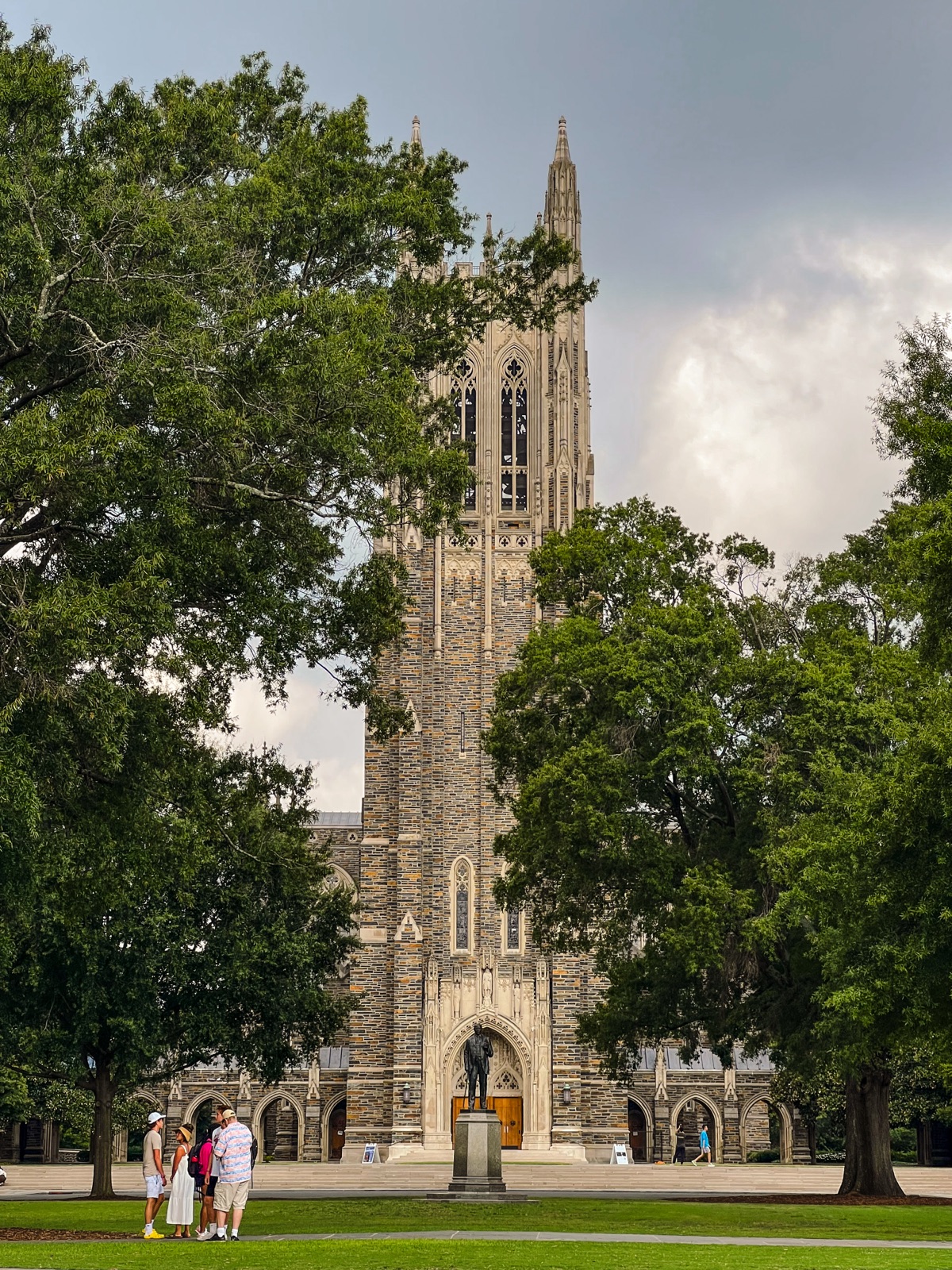
Duke Chapel is the architectural and spiritual centerpiece of the West Campus and the single most iconic structure at the university. Construction began in 1930 and the chapel was completed in 1935, built in the Collegiate Gothic style using the same locally quarried ironstone that gives the entire campus its distinctive blue gray appearance. At 210 feet tall, it is visible from much of the West Campus and creates the kind of dramatic skyline you rarely see outside of England or continental Europe.
The interior is equally impressive. The nave seats roughly 1,800 people and is lit partly by a series of large stained glass windows along both sides. The windows depict figures from church history, university history, and the broader history of North Carolina, and they fill the space with warm colored light on sunny mornings. At the west end of the nave, a 50 bell carillon towers above the main entrance. The bells are played regularly and their sound carries across the entire campus on warm afternoons.
The chapel is open to visitors Monday through Saturday from 8am to 8pm and Sunday from 8am to 6pm. There is no admission fee. Regular worship services, concerts, and special events take place throughout the year, and many of these are free or very low cost. Even if you simply walk in to stand in the nave for a few minutes, it is one of those spaces that creates an impression that lasts.
Sarah P. Duke Gardens
Attached to the southern edge of West Campus, Sarah P. Duke Gardens is one of the most visited public gardens in the entire Southeast. The gardens cover 55 acres and are divided into five distinct sections, each with its own planting philosophy and character. They are free, open every day from 8am to dusk, and require no reservation or ticket of any kind.
The Historic Gardens near the main entrance on Anderson Street are formal and structured, with tiered stone terraces, reflecting pools, and carefully maintained perennial beds. The Japanese Garden section is quieter and more contemplative, with traditional stone lanterns, a wooden bridge, a koi pond, and seasonal plantings that reward multiple visits across the year. The H.L. Blomquist Garden of Native Plants is dedicated entirely to flora native to the Piedmont and coastal plain of the Carolinas and is especially beautiful in summer and fall.
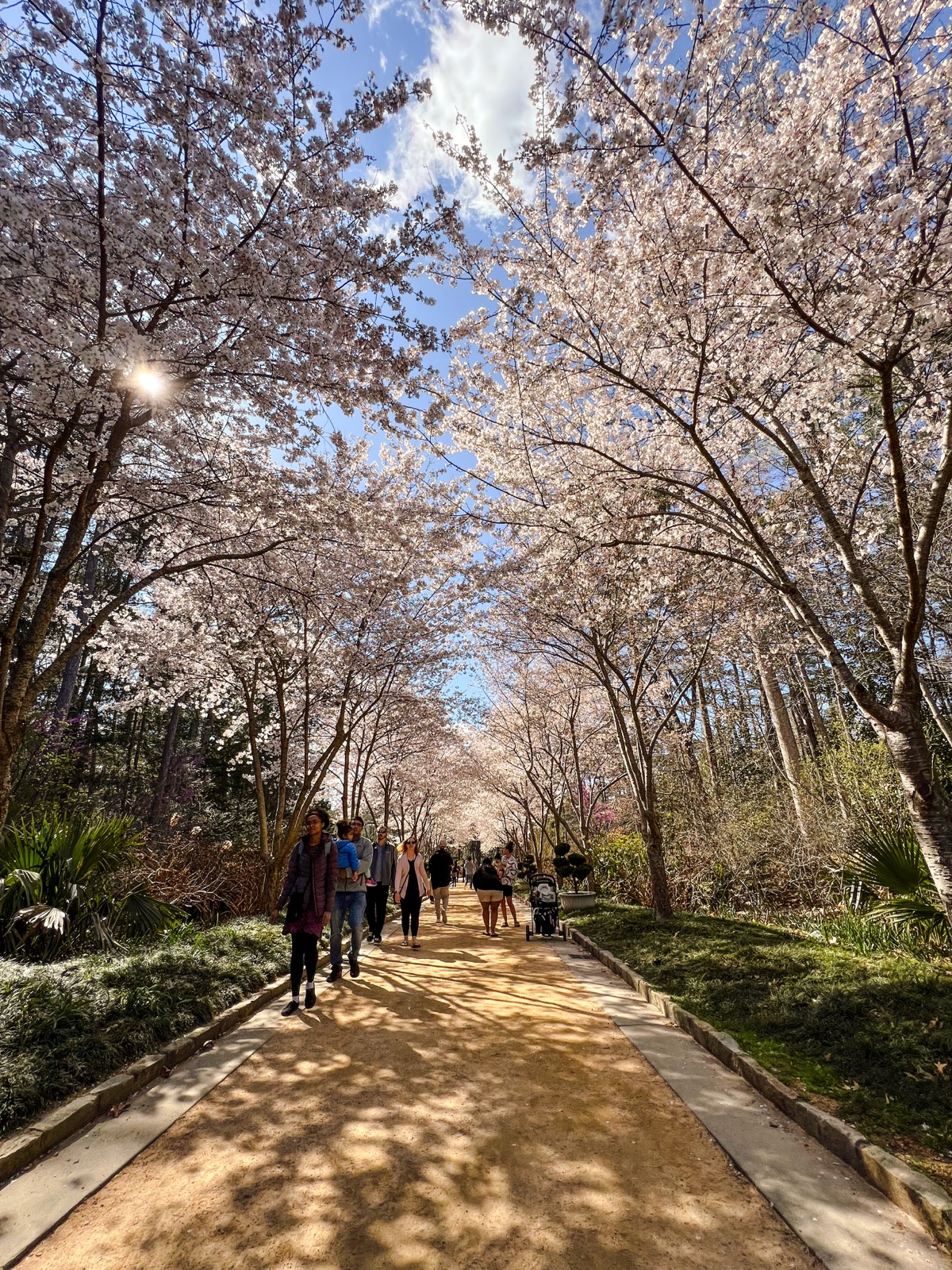
The gardens are most famous for their cherry blossom season, which typically arrives in late February through mid March. At peak bloom, the main pathways and terrace areas are canopied in pale pink and white, and the gardens become one of the most photographed places in the Triangle. Even outside of spring, however, the gardens have something to offer at every season. Summer brings lush beds and full canopy. Fall adds warm foliage color. Winter reveals the structure and bones of the formal garden areas.
Plan to spend at least 90 minutes to two hours if you want to walk the full loop and explore each section properly. The gardens are large enough that a rushed visit will leave you feeling like you missed most of what was there.
The Nasher Museum of Art
The Nasher Museum of Art is one of the most underrated cultural institutions in the Triangle and one of the genuinely great reasons to visit Duke's campus even if you have no connection to the university. The museum, which opened in 2005, was designed by modernist architect Rafael Vinoly and is architecturally striking in its own right. The vaulted glass ceiling over the main galleries floods the interior with natural light in a way that complements the permanent collection particularly well.
The permanent collection spans ancient to contemporary and has notable strength in modern and postwar work, African art, and medieval European pieces. Rotating exhibitions bring major works from outside the collection throughout the year and have featured partnerships with significant international institutions. Admission is free, which removes any reason not to stop in for at least an hour during a campus visit.
The museum's cafe and outdoor terrace are also worth noting. The terrace overlooks the surrounding campus greenspace and is a pleasant place to sit between gallery sections, particularly in good weather. The museum shop carries a well edited selection of art books, prints, and gifts that are better than average for a university museum.
Duke West Campus
Even beyond the chapel and the museum, the West Campus quad is worth walking simply for the architecture and the atmosphere. The central lawn, which runs from the chapel steps outward toward the science buildings and academic departments, is framed on both sides by Gothic Revival buildings in the characteristic Duke stone. The effect on a clear day, particularly in spring or fall, is genuinely beautiful and unlike almost anything else in North Carolina.
Perkins Library, the main research library, anchors the academic core of the quad and is one of the finest university library buildings in the South. Its vaulted reading rooms are open to visitors during operating hours and worth stepping inside. Cameron Indoor Stadium, home of the Duke Blue Devils basketball program, sits at the northwestern edge of West Campus and is worth walking past even when no games are being played. The exterior gives a sense of the building's scale and history without needing to go inside.
The Duke Stone itself is worth understanding if you want to appreciate the campus coherence. The grayish blue ironstone was quarried locally and used consistently throughout the construction of West Campus in the 1920s and 1930s. The decision to use a single locally sourced material gave the campus a unified architectural identity that most universities built across multiple eras never achieve.

Duke East Campus
A mile east of the main West Campus sits the older East Campus, the original location of Trinity College before it became Duke University in 1924. East Campus has a completely different architectural character: Georgian Revival red brick buildings that predate the Gothic construction of West Campus by several decades. The overall effect is quieter, more intimate, and in some ways more classically collegiate.
East Campus is primarily undergraduate housing, with most Duke freshmen living here during their first year. The Baldwin Auditorium anchors the eastern end of the main lawn and is used for concerts and lectures throughout the year. The East Campus lawn itself, a wide open green flanked by the dormitory buildings, is a beautiful space on a spring afternoon and sees considerably fewer visitors than West Campus, making it a good option if you want a quieter version of the Duke campus experience.
The two campuses are connected by Campus Drive, a pleasant tree lined road that takes about 15 minutes to walk or a few minutes by car. Many visitors to East Campus also stop at the Sarah P. Duke Gardens on their way back, since the gardens are located between the two campuses and easily accessible from Anderson Street.
Cameron Indoor Stadium
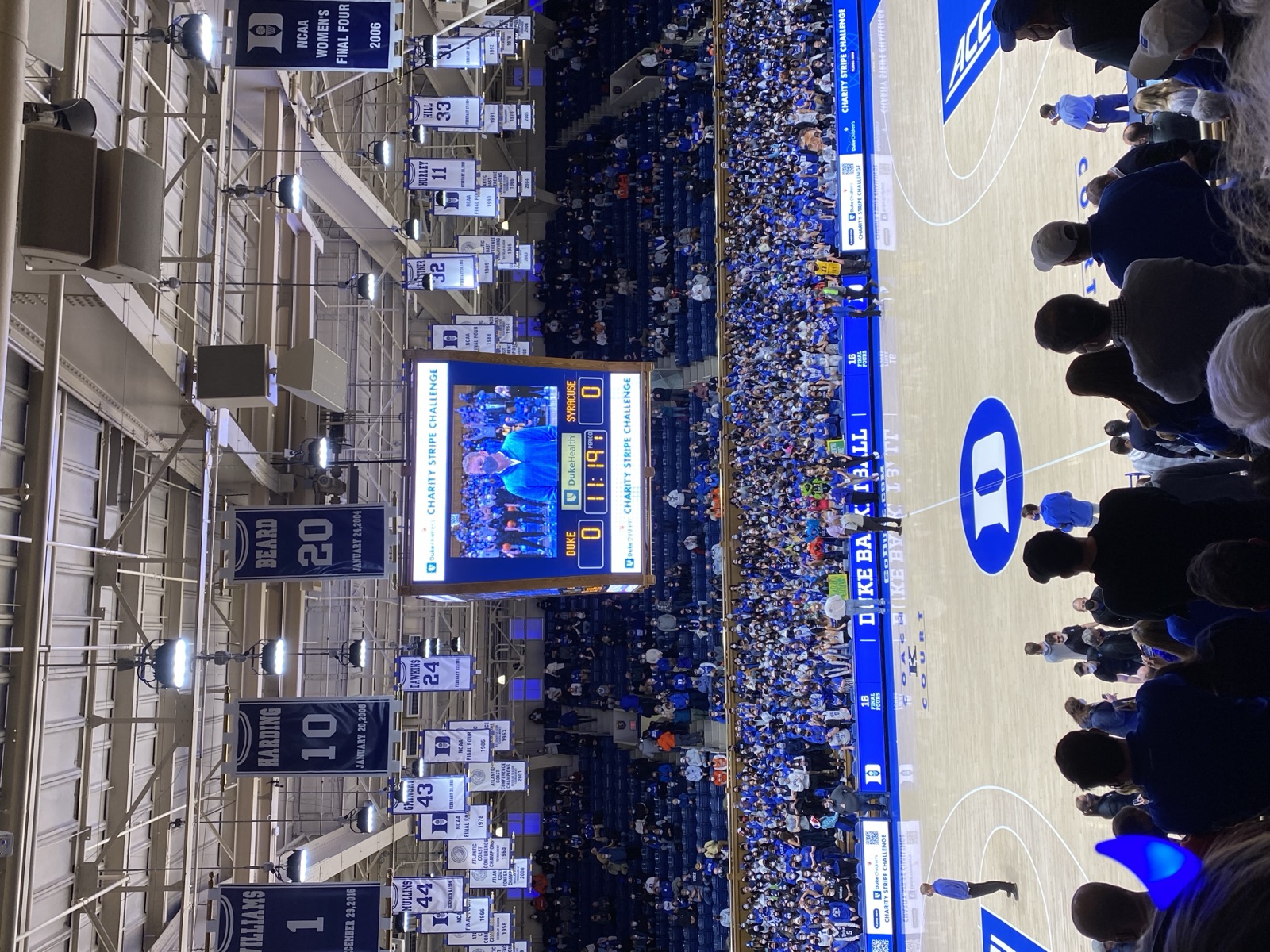
Cameron Indoor Stadium is one of the most iconic arenas in American college sports and the home of the Duke Blue Devils men's basketball program. Built in 1940 and renovated multiple times since, it seats about 9,300 people and is known for an atmosphere that is widely considered among the best in college basketball. The Cameron Crazies, the student section that takes up one entire end of the arena floor level, are famous for their organized chants, preparation, and intensity on game nights.
On non game days the exterior of Cameron is worth walking past on any campus tour. The building is surrounded by the tent city that students sometimes construct days before big games to claim their seats, a tradition called Krzyzewskiville after the longtime head coach. Even standing outside the arena between games you get a strong sense of the building's character and its place in the Duke community. Tours of the interior are occasionally available through the university; checking the Duke Athletics website in advance is the best way to find out what is available during your visit.
Practical Visitor Information
Duke University's campus is open to the public and free to explore. There are no gates, no checkpoints, and no need to register or obtain a pass before walking the grounds. Parking is available in designated visitor lots off Campus Drive on the western side of campus and near the medical center area. Maps of parking areas and lot locations are available at duke.edu/visitors and the on campus information kiosks near the main entrances.
The most convenient entry point for visitors focused on the chapel and the main quad is from the Chapel Drive entrance off Swift Avenue. For the botanical gardens, the main entrance is at 420 Anderson Street with a free parking lot adjacent. For the Nasher Museum, parking is available in the museum's own lot off Campus Drive near the intersection with Towerview Road.
Weekday visits tend to be less crowded than weekends, particularly around football and basketball game days when parking and campus access can be more complicated. Spring weekdays during cherry blossom season are the busiest regular season period for the gardens; arriving before 10am is the best way to avoid peak foot traffic.
Frequently Asked Questions
Can you visit Duke University campus?
Yes. Duke University campus is fully open to the public. You do not need to check in anywhere or get a visitor pass to walk the grounds. Duke Chapel, the main quad, and outdoor spaces are freely accessible, and both the Nasher Museum of Art and Sarah P. Duke Gardens are free and open to visitors every day.
Is Duke Chapel free to visit?
Yes. Duke Chapel is free and open to visitors Monday through Saturday from 8am to 8pm, and Sunday from 8am to 6pm. There is no admission fee. The chapel hosts regular concerts, services, and events throughout the year, many of which are also free or low cost.
What is Duke University known for?
Duke University is known for its Gothic architecture and one of the most beautiful campuses in the country, its highly ranked medical and law schools, its research programs, and its legendary men's basketball program. Duke Chapel is one of the most recognized buildings on any college campus in the United States, and the Sarah P. Duke Gardens are among the most visited public gardens in the Southeast.
How long does it take to walk Duke campus?
A walk through West Campus covering the main quad and the exterior of Duke Chapel takes about 45 minutes at a relaxed pace. Adding a visit inside the chapel and a stop at the Nasher Museum brings it closer to two hours. Including a full walk of Sarah P. Duke Gardens adds another 90 minutes to two hours. Most visitors should budget half a day to see the campus and gardens properly.
Is Duke University in Durham or Chapel Hill?
Duke University is in Durham, NC. Its main campus address is Durham, NC 27708. The University of North Carolina at Chapel Hill is a separate institution located about ten miles southwest of Durham in the town of Chapel Hill. The two universities and NC State in Raleigh form the Research Triangle, one of the major research and technology corridors in the United States.
What is the most famous building at Duke University?
Duke Chapel is the most famous and recognizable building on campus. The Gothic cathedral, completed in 1935, stands 210 feet tall and is visible from much of the West Campus quad. Cameron Indoor Stadium, home of the Duke Blue Devils basketball team, is also widely recognized as one of the most iconic arenas in college sports anywhere in the country.