The University of North Carolina at Chapel Hill was chartered in 1789 and opened to students in 1795, making it one of the first public universities in the United States to actually hold classes. The campus has grown considerably since then, but the spirit of the place has stayed consistent, it is a public university that takes seriously its role in the state and the country. Walking the grounds today, especially around the historic core near the Old Well, you get a clear sense of that history.
The Old Well
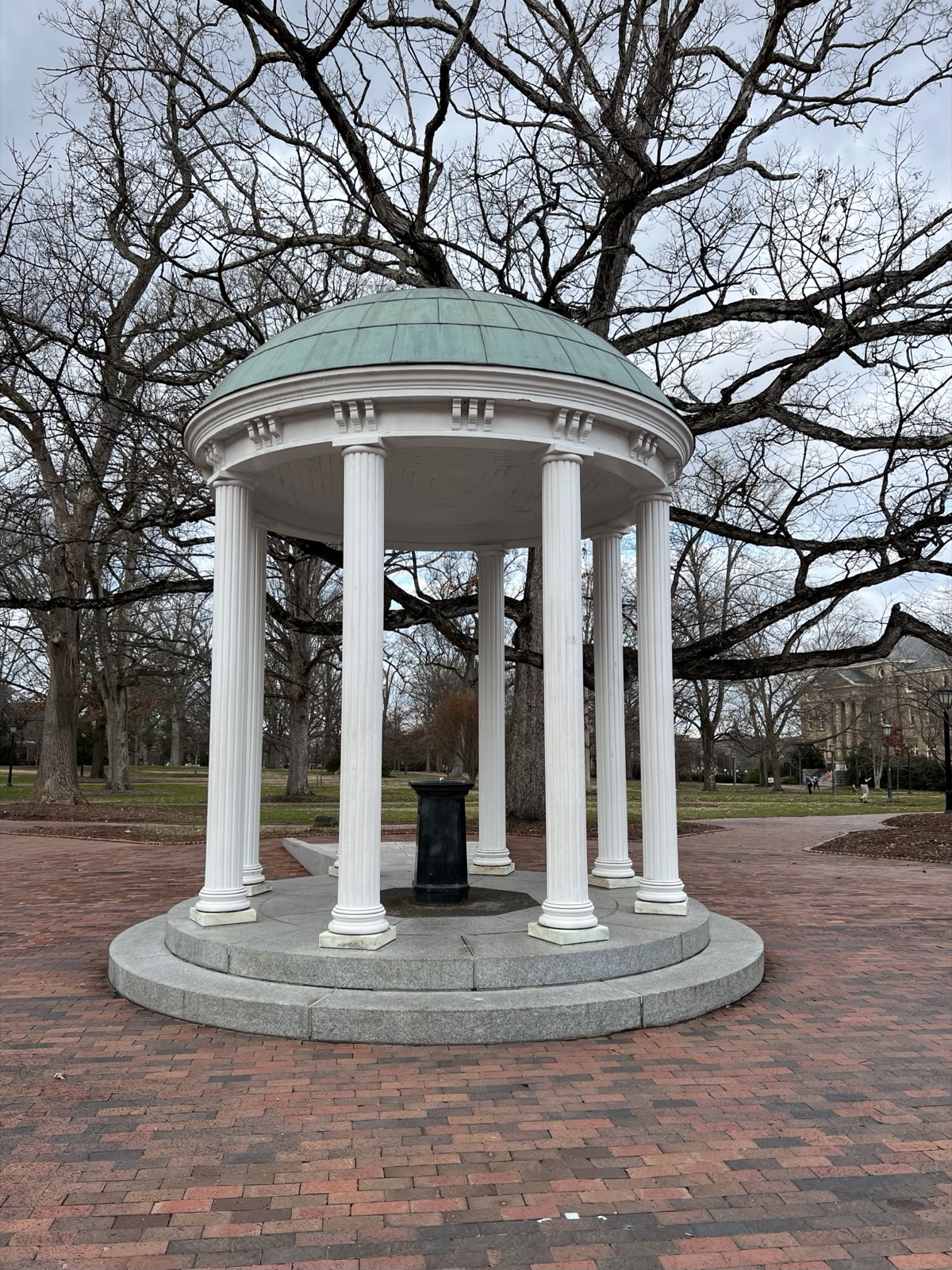
The Old Well is the most recognized symbol on the UNC campus. It sits at the center of Cameron Avenue near the Polk Place lawn, and it has been a gathering point for students since the 1800s. The current Classical Revival structure dates to 1897. There is a long standing tradition that drinking from the Old Well on the first day of classes will bring good grades for the semester. Whether you believe that or not, it is a beautiful spot on the campus and the right place to start any visit.
The Bell Tower
The Morehead Patterson Bell Tower stands at the southern edge of campus and is one of the most photographed landmarks in Chapel Hill. It was built in 1931 and rises 167 feet. The bells ring on the quarter hour and can be heard across much of campus. On football Saturdays and graduation days, walking past the Bell Tower feels like a proper ceremony. It is an easy landmark to find and worth stopping at, especially for the view of the surrounding campus.
Morehead Planetarium and Science Center
Morehead Planetarium opened in 1949 and served for decades as a navigation training facility for NASA astronauts. Mercury, Gemini, and Apollo astronauts, including John Glenn and Neil Armstrong, trained here. Today it is a public science center and planetarium open to visitors. The star theater shows are excellent, and the history of the building's role in the space program gives it a weight that most campus attractions do not have. It is on East Franklin Street right at the edge of campus and easy to combine with time on Franklin Street itself.
Kenan Memorial Stadium
Kenan Memorial Stadium is home to Tar Heels football and seats over 50,000 fans. It opened in 1927 and sits on the southern edge of campus. On a fall Saturday before a home game, the atmosphere around the stadium and on Franklin Street is one of the best college football experiences in the ACC. Even if you are not attending a game, walking past the stadium when the team is in town gives you a good feel for how much football means to this community.
The Dean E. Smith Center
The Dean Smith Center, known as the Dean Dome, is where Tar Heels basketball is played and is arguably the most important building on campus for a large portion of the UNC fanbase. It opened in 1986 and is named after Coach Dean Smith, who won two national championships and sent dozens of players to the NBA, including Michael Jordan. UNC basketball has won six national titles. On a game night, the Dean Dome is one of the loudest and most electric arenas in college sports. Tickets are hard to come by, but even a walk around the exterior of the building is worth it if you are a fan of the sport.
Ackland Art Museum
The Ackland Art Museum on South Columbia Street is one of the best small art museums in North Carolina and it is free to visit. The permanent collection covers ancient to contemporary works, with strong holdings in Asian art, European paintings, and works on paper. It is a quiet and well curated space that does not get as much attention as it deserves. If you have an hour between other stops in Chapel Hill, this is an excellent use of that time.
Notable Alumni
UNC has produced a remarkable number of notable graduates across politics, entertainment, journalism, and sports. A few worth knowing:
- Michael Jordan, played for the Tar Heels from 1981 to 1984, hit the game winning shot in the 1982 national championship game
- James K. Polk, 11th President of the United States, graduated from UNC in 1818
- Andy Griffith, actor, comedian, and musician, graduated in 1949
- Charles Kuralt, CBS journalist and "On the Road" correspondent, UNC class of 1955
- Thomas Wolfe, novelist, author of Look Homeward, Angel, attended UNC
The Civil Rights History
Chapel Hill and UNC played a meaningful role in the civil rights movement. In 1960, the Chapel Hill Nine, a group of students and community members, staged sit ins at local segregated businesses, making Chapel Hill one of the early battlegrounds for lunch counter desegregation in the South. The university has since worked to acknowledge and document that history. Several markers and exhibits on campus reference the movement and the individuals who drove it. It is part of the campus's story that is worth knowing before you visit.
Frequently Asked Questions
Is the UNC Chapel Hill campus open to the public?
Yes. The campus is open to the public and free to explore. You can walk the grounds, visit the Old Well, see the Bell Tower, and tour landmarks like the Morehead Planetarium without any admission cost. The Ackland Art Museum is also free to enter.
What year was UNC Chapel Hill founded?
UNC was chartered by the North Carolina General Assembly in 1789 and opened to students in 1795. It is considered one of the first public universities in the United States to actually hold classes.
What famous people went to UNC Chapel Hill?
Notable alumni include Michael Jordan, President James K. Polk, Andy Griffith, journalist Charles Kuralt, and novelist Thomas Wolfe, among many others across sports, politics, and the arts.
Did NASA really train astronauts at UNC?
Yes. Morehead Planetarium on the UNC campus served as a celestial navigation training facility for NASA from the 1950s through the 1970s. Mercury, Gemini, and Apollo astronauts, including John Glenn and Neil Armstrong, trained there.