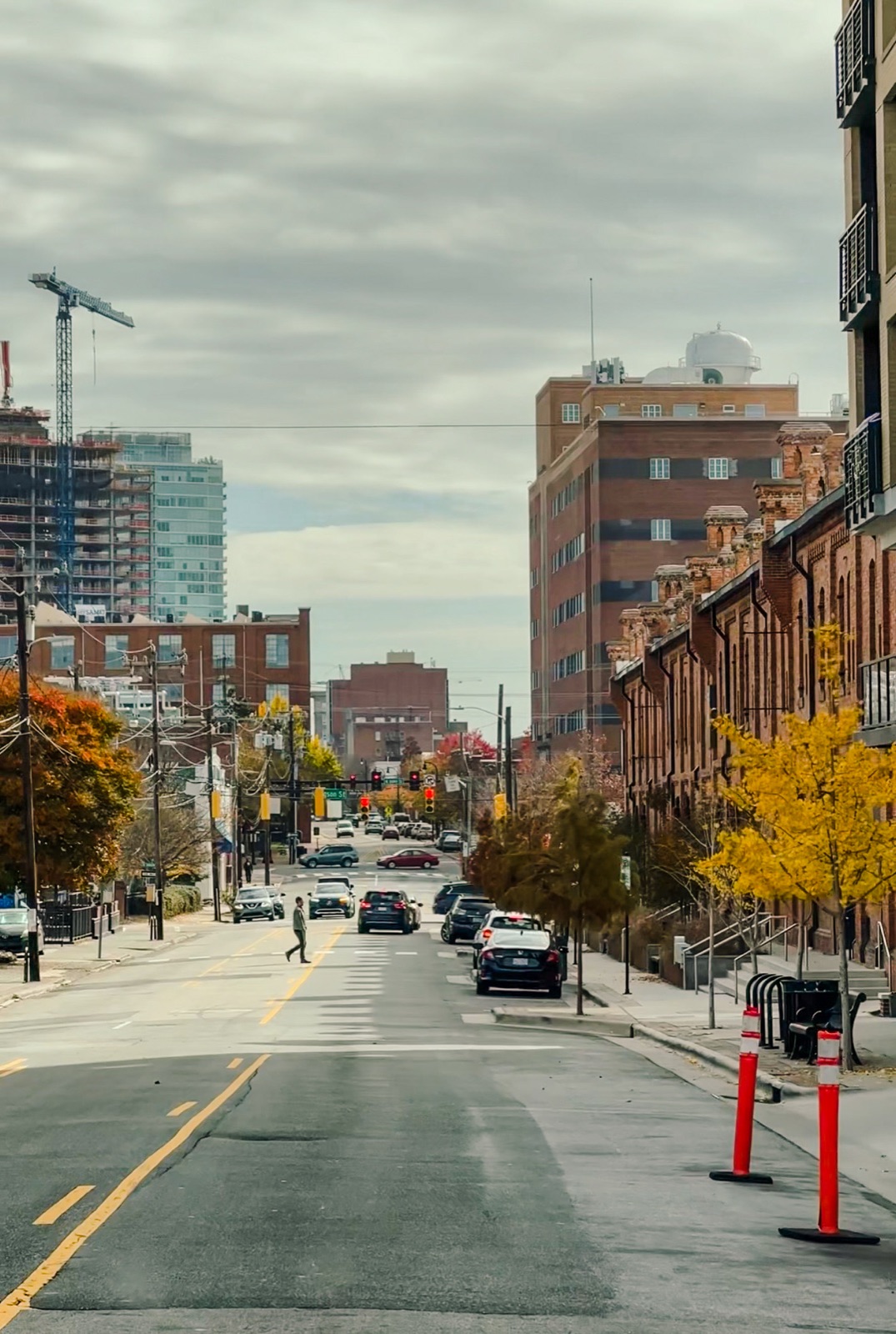
Every spring, one of the most beautiful things in the entire Triangle happens quietly on the Duke University campus. The cherry trees at Sarah P. Duke Gardens burst into bloom, turning the paths into tunnels of soft pink and white. It lasts only a week or two, but when it happens it is genuinely one of the most stunning natural displays in North Carolina.
If you have been wondering when to go, what to expect, or whether it is worth the trip, here is everything you need to know about cherry blossom season at Duke Gardens.
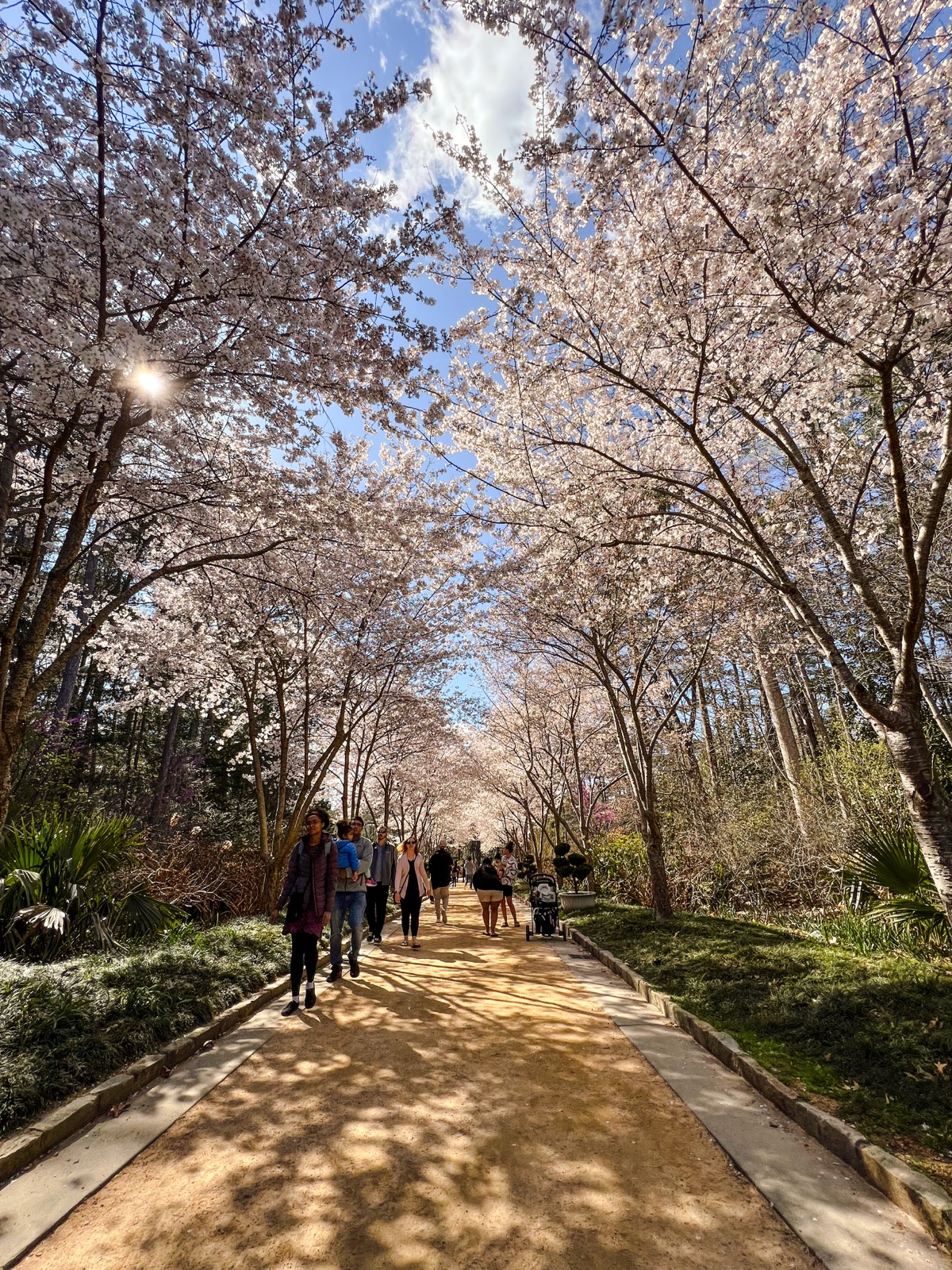
When Do the Cherry Blossoms Bloom at Duke Gardens?
Cherry blossoms at Sarah P. Duke Gardens typically bloom from late February through mid March. The exact timing shifts from year to year depending on winter temperatures and how early spring arrives. In a warm winter, you might see blooms as early as the third week of February. In a cooler year, peak bloom can push into the second week of March.
The most reliable window to aim for is the first two weeks of March. That said, the trees move fast once they start. A warm week can take a tree from bud to full bloom to falling petals in under ten days, so it pays to keep an eye on conditions as the season approaches.
What Kind of Cherry Trees Are at Duke Gardens?
Duke Gardens has a mix of ornamental cherry varieties, including Yoshino cherries, which are the same variety famous at the Tidal Basin in Washington DC. These are the trees that produce the classic soft white to pale pink blooms. The gardens also have Japanese flowering cherries and a few other ornamental varieties that bloom at slightly different times, which means the overall blossom season can stretch over a couple of weeks.
Where Exactly Are the Cherry Blossoms?
The cherry trees are spread throughout the gardens, but there are a few spots that are especially worth your time during bloom season.
- The Terrace Garden near the main entrance is one of the most photogenic spots
- The path leading toward the H.L. Blomquist Garden of Native Plants has several large ornamental cherries
- The Historic Gardens area, with its formal layout, frames the blossoms beautifully
- The Doris Duke Center lawn area offers open views of the canopy during peak bloom
Plan to walk the full loop through the gardens rather than just sticking to one area. The best views tend to shift depending on where the sun is and which trees are at peak bloom that day.
Is Duke Gardens Free?
Yes. Sarah P. Duke Gardens is free and open to the public every single day of the year, from 8am to dusk. There is no admission fee, no reservation required, and no catch. It is one of the best free things to do in all of Durham, and during cherry blossom season it becomes one of the most popular spots in the entire Triangle.
Tips for Visiting During Cherry Blossom Season
- Go on a weekday morning if you can. Weekends during peak bloom get busy, especially mid morning through mid afternoon
- Arrive early. The light is best in the morning and the crowds are thinner before 10am
- Overcast days can actually be great for photos because the soft light makes the pale pinks and whites really pop without harsh shadows
- Wear comfortable walking shoes. The gardens cover 55 acres and you will want to explore more than just the entrance area
- Parking is available in the lot off Anderson Street, which is closest to the gardens main entrance
- Check Duke Gardens' social media pages in late February to see early updates on bloom progress
What Else Is Near Duke Gardens?
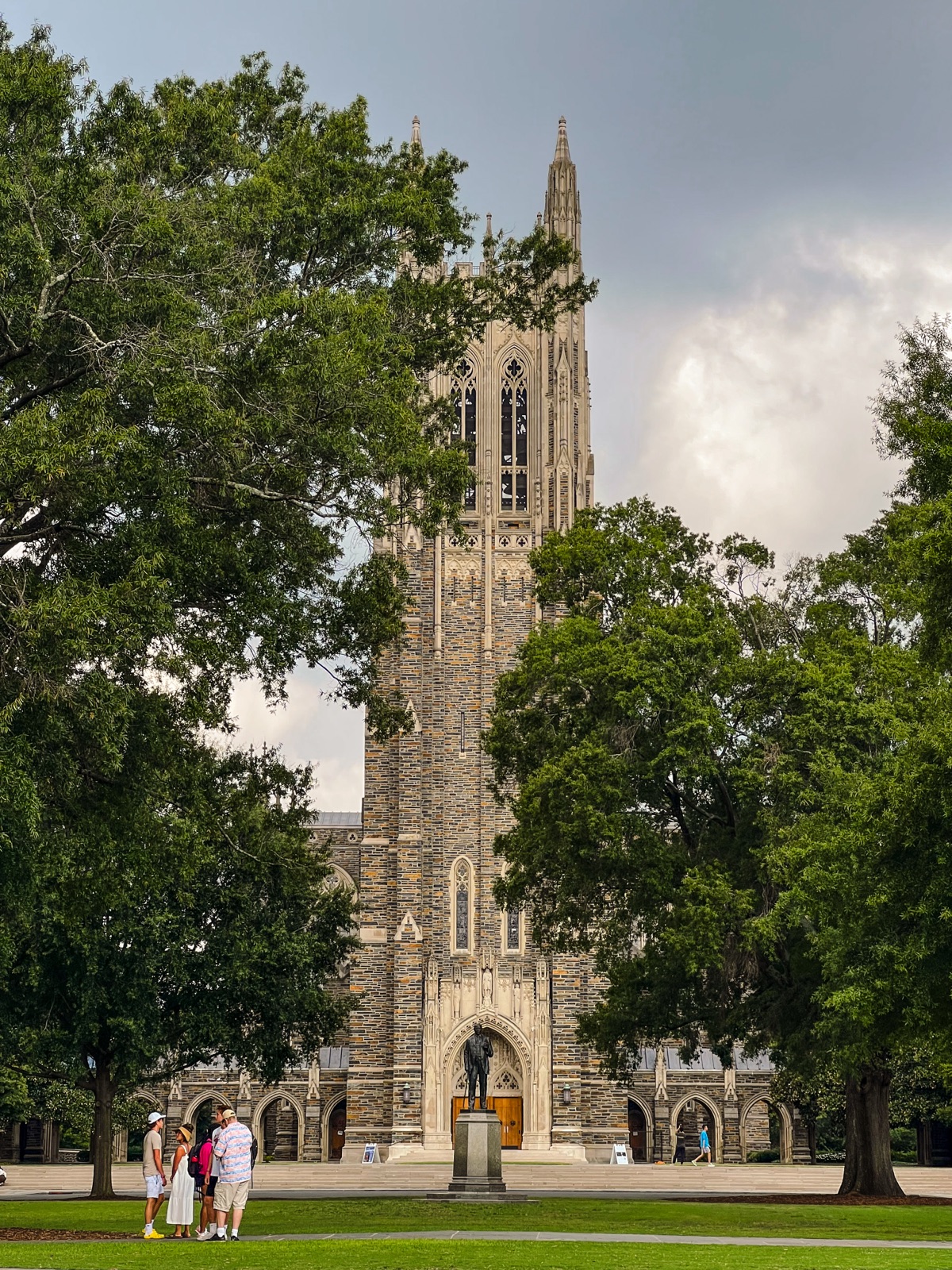
The gardens sit right on the edge of Duke University's main campus, which means you can easily pair your visit with a walk through one of the most beautiful college campuses in the country. Duke Chapel, the stunning Gothic cathedral at the heart of campus, is a short walk away and worth seeing any time of year. The Nasher Museum of Art on campus is also free and has a rotating collection worth checking out.
After your visit, head into downtown Durham for lunch or coffee. The Durham Food Hall is about ten minutes away by car and has a great lineup of vendors. Brightleaf Square and American Tobacco Campus are also close and make for a great afternoon when combined with a morning at the gardens.
How Long Does a Visit to Duke Gardens Take?
Most people spend between 45 minutes and two hours at the gardens. If you are there during cherry blossom season and want to see everything, budget closer to two hours so you can walk the full loop and explore the different garden sections. The gardens are large enough that a rushed visit means missing a lot.
Frequently Asked Questions
When do the cherry blossoms bloom at Duke Gardens?
Typically late February through mid March, with peak bloom usually falling in the first two weeks of March. Timing varies by five to ten days depending on the year's temperatures.
Are Duke Gardens free to visit?
Yes. Sarah P. Duke Gardens is free and open to the public every day from 8am to dusk. No tickets, no reservations, no fee.
How long do the cherry blossoms last at Duke Gardens?
Peak bloom typically lasts one to two weeks. A stretch of warm weather after bloom starts can shorten the season significantly, so it is worth going sooner rather than later once you see the trees beginning to flower.
Is it worth visiting Duke Gardens if it is not cherry blossom season?
Absolutely. Duke Gardens is beautiful year round. The gardens have over 5,000 plant varieties, and there is almost always something in bloom no matter when you visit. Spring is peak season, but summer and fall have their own highlights.
Can you bring a picnic to Duke Gardens?
Yes. Picnics are welcome in the gardens. The lawn areas near the Doris Duke Center are popular spots to spread out during cherry blossom season.
Where should I park for Duke Gardens?
The closest parking is in the free lot at 420 Anderson Street. During peak cherry blossom weekends, this lot can fill up. Arriving early on weekday mornings usually means no issue finding a spot.