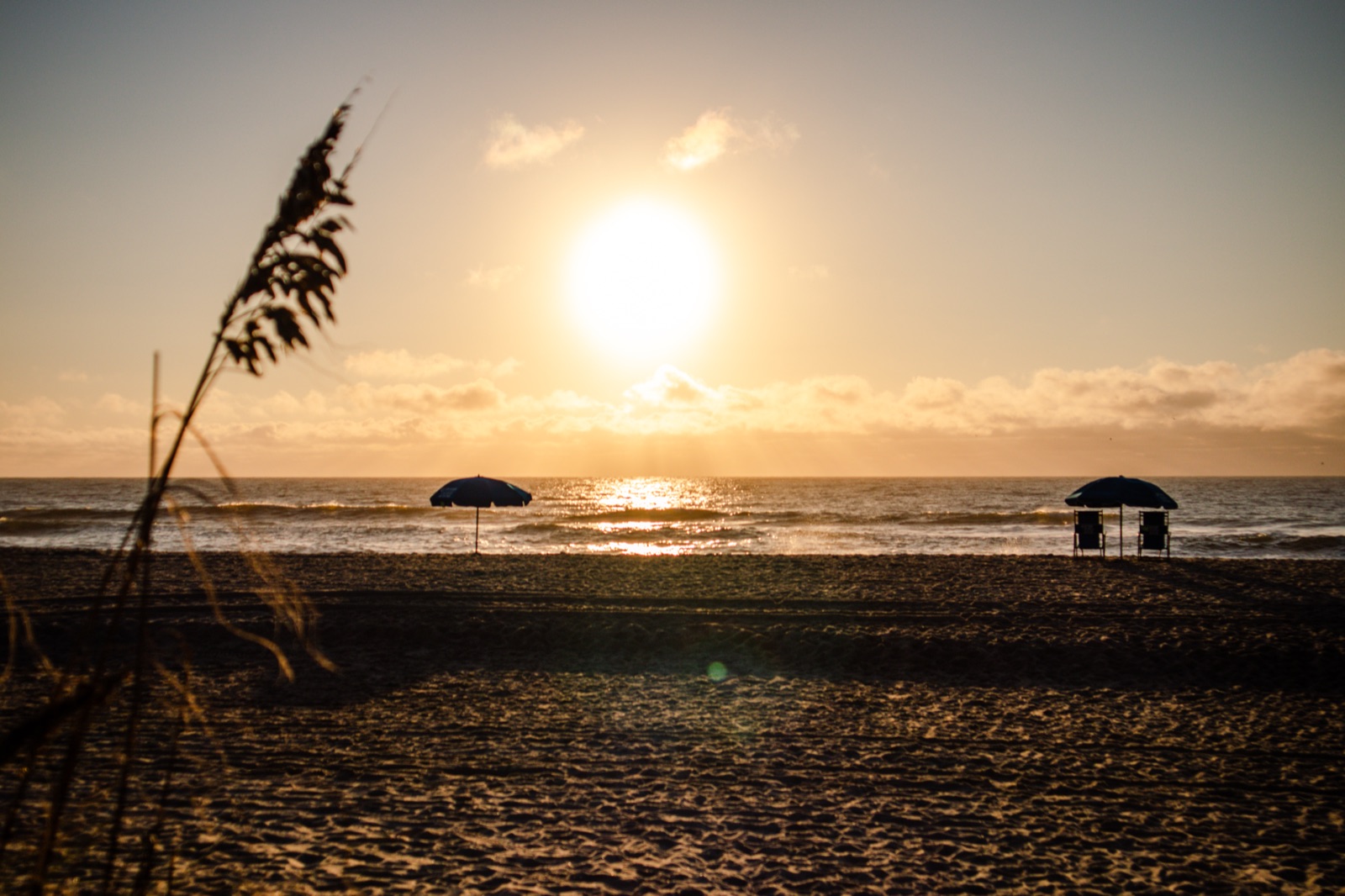
Cape Lookout National Seashore covers about 56 miles of undeveloped barrier islands at the southern end of the Outer Banks chain. There are no roads, no hotels, no restaurants, and no bridges connecting it to the mainland. The only way in is by ferry, which is either an inconvenience or the entire point depending on who you ask. The people who come here tend to appreciate what that isolation means: pristine beaches, very few visitors relative to the size of the park, and a quality of quiet that is genuinely hard to find on the NC coast.
The seashore covers three main sections: North Core Banks and South Core Banks, which together make up the uninhabited main island chain ending at the cape itself, and Shackleford Banks, a separate island just west of the cape where about 100 to 120 wild horses live year round. The Cape Lookout Lighthouse stands near the southern tip of South Core Banks and is the most visible landmark in the entire park.
Cape Lookout Lighthouse
The Cape Lookout Lighthouse is one of the most distinctive lighthouses on the entire East Coast. While the Cape Hatteras lighthouse is recognizable for its black and white spiral stripe, Cape Lookout is marked by a diamond pattern, black and white checkerboard squares that make it immediately identifiable from the water. It was built in 1859, stands 163 feet tall, and is still an active aid to navigation managed by the US Coast Guard.
The lighthouse is open for climbing on a seasonal basis through the National Park Service. The climb is 207 steps and takes you to the gallery deck, where the view south over the cape and west over Core Sound is genuinely spectacular. Space is limited and timed tickets are required when climbing is available. The adjacent keeper's quarters house a small museum with exhibits on the lighthouse's history and the life of lighthouse keepers at the cape.
The original lighthouse at Cape Lookout was built in 1812 and was the first lighthouse in the area. It was considered ineffective almost immediately, described as more of an annoyance to mariners than an aid, and was eventually replaced by the current structure in 1859.
Shackleford Banks and the Wild Horses
Shackleford Banks is a separate island in the Cape Lookout National Seashore, about 8 miles long and running parallel to the town of Beaufort across Back Sound. A herd of about 100 to 120 wild horses has lived on Shackleford for centuries. The most widely accepted theory is that they are descended from horses brought to the Carolina coast by Spanish explorers in the 1500s, shipwrecked or released on the barrier islands. They have been living wild on the island ever since.
The horses roam freely across the entire island. They are genuine wild animals, not domesticated or managed, and visitors are required to stay at least 50 feet away. They are comfortable around people but entirely unpredictable, and the National Park Service is serious about the distance requirement. Getting on the ferry early and heading to the western end of the island on arrival gives the best chance of seeing the horses in the morning when they are often near the beach or the sound.
Shackleford Banks is also excellent for shelling. Because the island sees so few visitors and there is no commercial development, shells accumulate on the beach undisturbed. Early morning low tide is the best time, and finds here can be significantly better than anything on the developed barrier islands to the north.
Getting to Cape Lookout by Ferry
There is no bridge to Cape Lookout National Seashore. All access is by private boat or passenger ferry. The most reliable year round ferry service runs from Harkers Island, which is a small community about 12 miles east of Beaufort via US 70 and Island Road. The ferry crosses to the South Core Banks near the lighthouse and takes about 20 to 30 minutes depending on the service.
Seasonal ferry services also operate from Beaufort waterfront and from Morehead City in the warmer months. The Beaufort departure is convenient if you are already based in the Crystal Coast area and want to combine a Beaufort waterfront morning with an afternoon at the cape. Check with local ferry operators for current schedule and pricing as they vary by season.
The crossing to Shackleford Banks is shorter than the main cape. Several ferry services run directly from Beaufort and Harkers Island to Shackleford throughout the season. The round trip typically takes about 20 minutes each way and operators often offer 2 hour tours on the island.
The Beaches and Shelling
The beaches at Cape Lookout are some of the least disturbed beaches on the entire East Coast. South Core Banks runs about 20 miles from the northern inlet to the cape, and outside of the small developed area near the lighthouse, it is entirely undeveloped. In peak summer the visitor numbers are a fraction of what you would find at any comparable beach on the developed coast.
The beaches face the Atlantic on the ocean side and Core Sound on the back side. The sound side, especially near the lighthouse at the cape itself, is a strong shelling area. The cape acts as a catch point for shells moved by both ocean and sound currents, and finds here regularly include whelks, conchs, moon snails, olive shells, and sand dollars. The outer cape at low tide is the most productive spot.
Wildlife and Sea Turtles
Cape Lookout National Seashore is an important nesting ground for sea turtles in summer. Loggerhead sea turtles nest along the ocean beach from late May through August, and hatchlings emerge primarily in August and September. The National Park Service conducts nest monitoring throughout the season and volunteers sometimes assist with hatchling emergencies. Driving on the beach at night during turtle season requires a permit.
The park is also excellent for birding. The maritime shrub thicket on the cape side of South Core Banks hosts migrating warblers and other neotropical migrants in spring and fall. The shorebird populations on the inner banks and tidal flats on the sound side are significant. Brown pelicans, oystercatchers, royal terns, and black skimmers are all commonly seen.
Practical Tips for Visiting
There are no food or water facilities at Cape Lookout. Bring everything you need for the day including water, food, sunscreen, and anything else you might want. The sun exposure on the beach is intense and there is essentially no shade outside of the keeper's quarters area.
The NPS maintains primitive camping on both South Core Banks and Shackleford Banks. You can bring a tent and stay overnight, which changes the character of the visit entirely. Camping requires advance reservation with the NPS and visitors must pack in and pack out everything including all trash.
The ferry trip is weather dependent and operators will cancel in rough conditions. Summer afternoon thunderstorms are common on the NC coast and operators typically monitor conditions carefully. Departing early in the morning is generally the most reliable strategy during summer.
Frequently Asked Questions
How do you get to Cape Lookout National Seashore?
By ferry only. The main year round service departs from Harkers Island, about 12 miles east of Beaufort via US 70. Seasonal services also run from Beaufort waterfront and Morehead City. There is no bridge or road access to the park.
Is Cape Lookout free to visit?
Yes. There is no entrance fee to Cape Lookout National Seashore. However, you will pay for the ferry crossing, which varies by operator.
Can you see wild horses at Cape Lookout?
Yes. The wild horse herd lives on Shackleford Banks, which is part of the national seashore. Ferry services run directly to Shackleford from Beaufort and Harkers Island. You must stay at least 50 feet from the horses at all times.
Can you climb the Cape Lookout Lighthouse?
Yes, seasonally. The lighthouse is open for climbing when staffed by the NPS, typically from spring through early fall. Timed entry tickets are required and space is limited. Check the NPS Cape Lookout website for current climbing dates and reservation information.
Is Cape Lookout good for shelling?
Among the best shelling beaches on the East Coast. The undeveloped beaches at the outer cape and on Shackleford Banks accumulate shells without the constant harvest that depletes shells on more heavily visited beaches. Early morning low tide at the outer cape is the best combination.