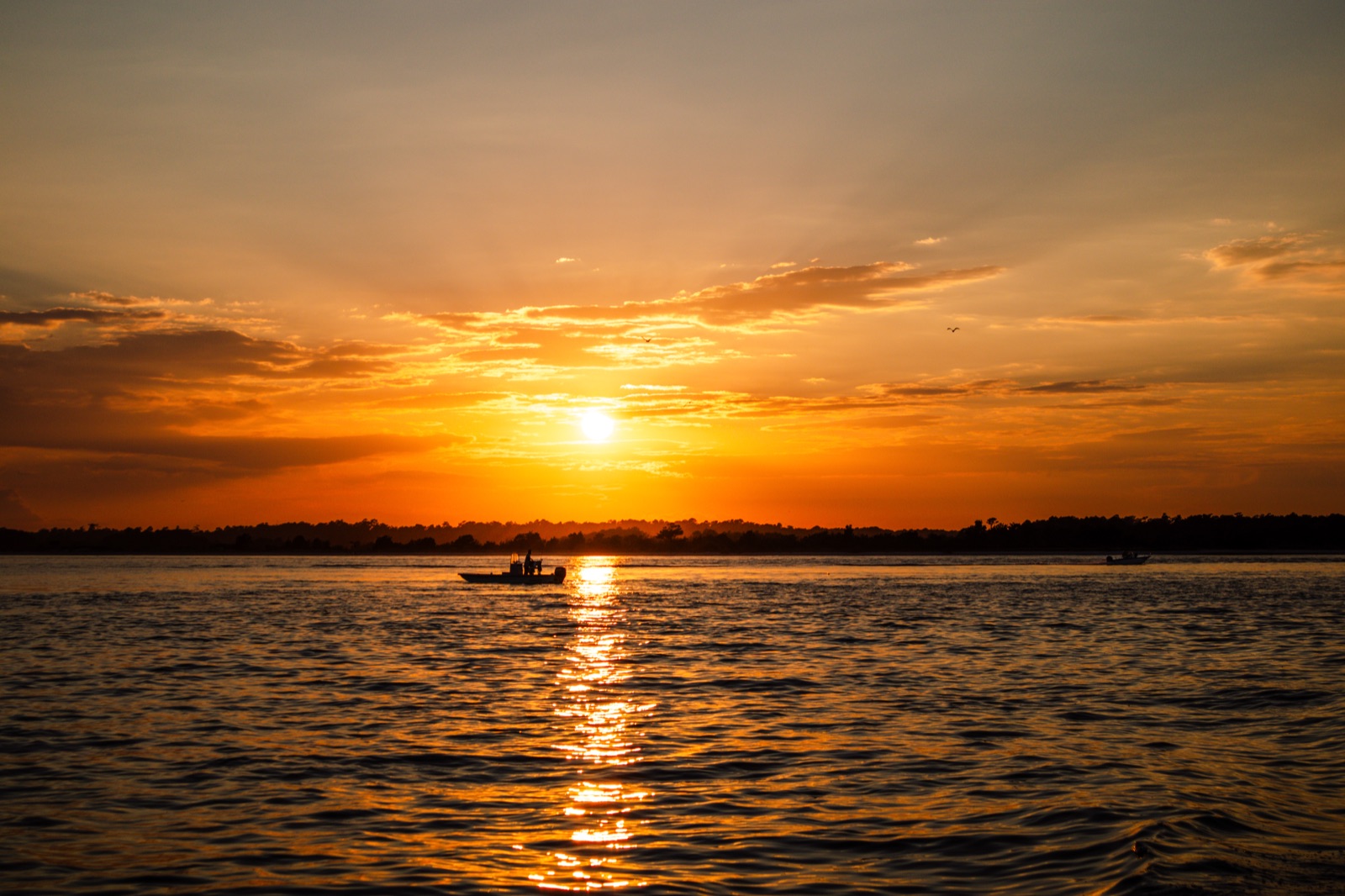
Ocracoke Island sits at the southern end of Hatteras Island and is accessible only by ferry, which is either the first thing people learn about it or the last obstacle they clear before discovering what makes it genuinely special. There are no chain restaurants here, no traffic lights, no Walmart. The village has about 900 year round residents, a harbor full of fishing boats, a white 1823 lighthouse that is the oldest active lighthouse in North Carolina, and a quality of quiet that becomes addictive after about an hour. People plan to stay a night and end up staying three.
The ferry from Hatteras is free and runs on a first come first served basis, which means the experience of getting to Ocracoke is part of the trip. The 40 minute crossing gives you a view of the sound, the inlet, and the tip of the island before you roll off onto NC 12 and drive the 12 miles through the national seashore to reach the village. That 12 mile drive through undeveloped barrier island is its own kind of preparation for what the island actually is.
Getting to Ocracoke by Ferry
Three ferry routes connect Ocracoke to the mainland and to Hatteras Island. The Hatteras to Ocracoke ferry is the most popular and the most convenient. It departs from the Hatteras ferry terminal on the south end of Hatteras Island, runs about 40 minutes, and is completely free. It operates year round on a daily schedule with multiple departures. In peak season the wait can be 30 to 90 minutes, especially for vehicles. Arriving before 8am or after 5pm significantly reduces the wait time.
The Cedar Island and Swan Quarter ferries both cross Pamlico Sound and connect Ocracoke to the mainland on the south side. These are toll ferries (approximately $15 to $20 per vehicle, check NC Ferry Division for current rates) and the crossings take between 2 and 2.5 hours depending on the route. Both are scenic and the Swan Quarter route in particular offers excellent birding over the sound. These routes make sense if you are driving the OBX from south to north or continuing inland rather than backtracking to Hatteras.
Ocracoke Lighthouse
The Ocracoke Lighthouse was built in 1823 and is the oldest active lighthouse in North Carolina. At 65 feet it is considerably shorter than the Cape Hatteras Lighthouse, which stands 198 feet to the north, but it is arguably more photogenic. The white stucco exterior, the compact proportions, and the cluster of 19th century keeper's cottages around the base make it one of the most photographed lighthouses on the entire East Coast.
The lighthouse is not open for climbing but the grounds are open daily. The keeper's quarters have been preserved and give a clear picture of what lighthouse life looked like in the 1800s. The lighthouse sits just a short walk from the village waterfront on a residential street, which adds to the feeling of stumbling across something unexpected in the middle of an otherwise quiet neighborhood.
Ocracoke Beach
The beach on the ocean side of Ocracoke is among the least developed and most pristine on the entire Outer Banks. It is managed by the Cape Hatteras National Seashore, which means no commercial development, no beach chairs for rent, no vendors. What you get is a wide, clean, largely empty Atlantic beach with good shelling, consistent surf, and very few people relative to the beaches further north.
Vehicles with a permit can access portions of the beach via designated driving access points, which is one of the best ways to reach more remote stretches. The day use parking area near the beach access road provides free parking and basic facilities. In summer the water is warm and the beach draws a steady crowd, but it never feels crowded the way Nags Head or Kill Devil Hills can in peak weeks.
The Ocracoke Ponies
Ocracoke has its own herd of wild ponies, distinct from the Corolla horses to the north. About 20 ponies live in a 180 acre fenced preserve managed by the National Park Service on the north end of the island along NC 12. The ponies are Spanish mustangs descended from horses believed to have been brought to the Carolina coast by early Spanish explorers, possibly as early as the 1520s. They have been on Ocracoke for so long that they are effectively inseparable from the island's identity.
Unlike the Corolla horses, the Ocracoke ponies cannot roam freely. The NPS moved them to the preserve in 1959 to protect both the horses and the island's vegetation. There is a free viewing area with a boardwalk and interpretive signs. The best time to see them active is early morning or early evening.
Blackbeard and Ocracoke
Ocracoke has one of the more dramatic footnotes in American colonial history. The pirate Blackbeard, whose real name was Edward Teach, used Ocracoke Inlet as a base of operations and the anchorage near the village as a gathering point for pirate crews working the Carolina coast. On November 22, 1718, Lieutenant Robert Maynard of the Royal Navy cornered Blackbeard in a shallow inlet near the island and killed him in a hand to hand battle.
Teach's Hole, the channel where Blackbeard met his end, is marked and visible from the village waterfront. There is a small Blackbeard exhibit at the Ocracoke Preservation Society museum. The combination of the lighthouse, the ponies, the pirate history, and the isolation makes Ocracoke one of the most genuinely storied places on the entire NC coast.
Where To Eat on Ocracoke
Howard's Pub has long been the most consistently reliable restaurant on the island. Note: the pub was sold in May 2025 to new ownership and did not open for the 2025 season. Check their social media before visiting to confirm they are open for the current season.
The Flying Melon Cafe is a local favorite for breakfast and brunch. The menu is inventive for a remote island, the coffee is good, and the line out the door on summer mornings is a reliable indicator of quality. It is a seasonal business, call ahead before visiting to confirm they are open for the season.
Dajio serves some of the best upscale dinner food on the island. The menu changes seasonally and leans heavily on local seafood. The outdoor deck overlooking the harbor is the place to be on a warm evening.
Back Porch Restaurant is the other reliable dinner option, with a menu focused on fresh local fish and a covered porch setting that works well on both warm and breezy nights.
Getting Around the Island
Ocracoke village is walkable and most visitors leave their vehicles parked once they arrive. A golf cart or bicycle makes it easy to cover the village and reach the beach access without dealing with parking. Several shops rent both in the village.
The island is about 16 miles long and the village sits on the southwestern tip. Everything of interest in the village is within about a mile of the Silver Lake Harbor waterfront. The beach access, pony pen, and lighthouse are all reachable within a few minutes by bike.
Frequently Asked Questions
How do you get to Ocracoke Island?
By ferry only. The free Hatteras ferry is the most popular route and takes about 40 minutes. Toll ferries also run from Cedar Island and Swan Quarter on the mainland. All ferries are operated by the NC Ferry Division.
Is the Hatteras to Ocracoke ferry free?
Yes. The ferry between Hatteras and Ocracoke is free and runs year round. No reservation is needed but there can be a wait in peak season. The Cedar Island and Swan Quarter ferries charge a toll per vehicle.
Can you stay overnight on Ocracoke?
Yes. The island has a range of accommodations including small inns, vacation rentals, and a National Park Service campground on the beach. Booking well in advance is necessary for summer weeks.
How far is Ocracoke from Nags Head?
About 90 miles by road and ferry. From Nags Head, drive south on NC 12 through Hatteras Island to the ferry terminal, then take the free 40 minute crossing to Ocracoke. Total travel time is roughly 2 to 2.5 hours depending on ferry wait.
Is Ocracoke worth the trip?
Most people who make the trip say it is the best thing they did on their OBX visit. The ferry, the undeveloped beach, the 1823 lighthouse, and the village make it feel different from any other OBX destination.